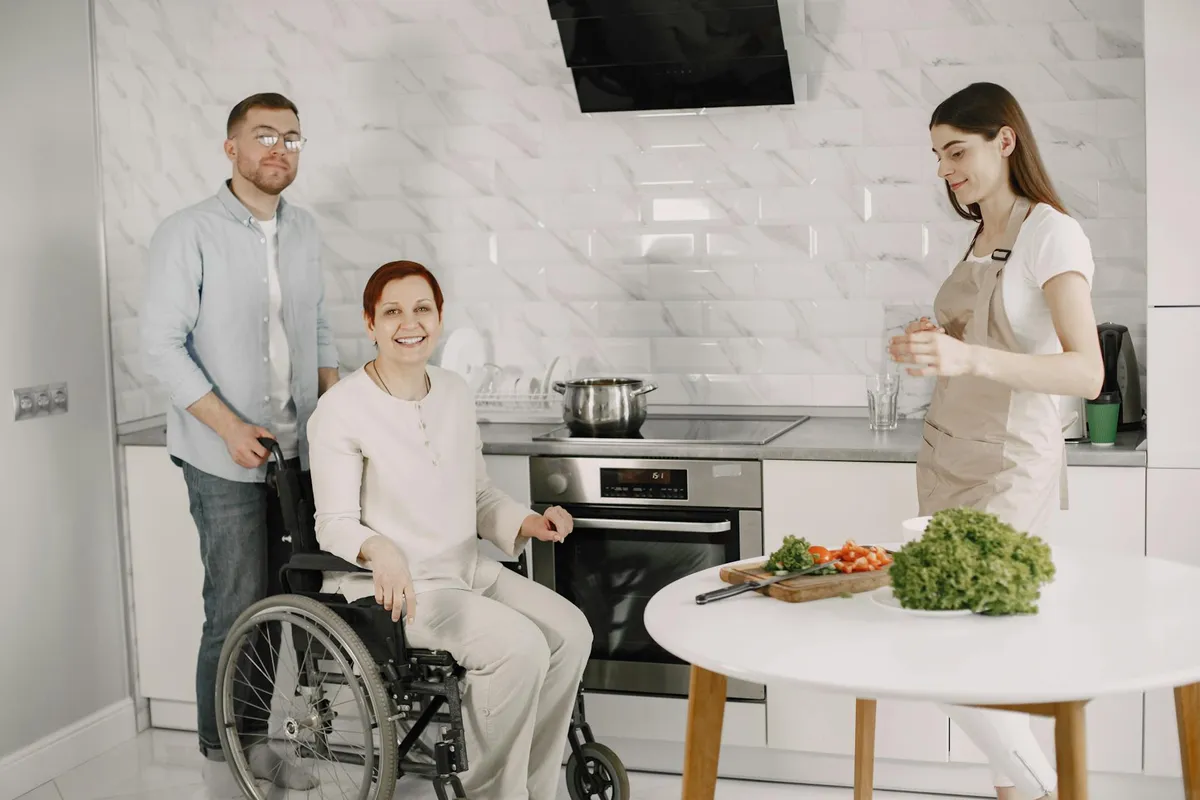
Her mother had been in the home for three months and was finally settling in. She recognized the morning caregiver, Rosa, and would reach for her hand when Rosa came in to help her dress. She knew that David, the evening caregiver, would bring her tea at four o’clock without being asked. She had stopped asking to go home.
Then Rosa left. A new woman came, someone her mother had never seen. Her mother would not let this stranger help her out of bed. She cried through breakfast. Two weeks later David left too, replaced by a young man who did not know that her mother liked her tea with one sugar, not two, and that she needed her glasses before she could see well enough to feel safe walking to the bathroom.
In a matter of weeks, the home that had finally started to feel like home felt foreign again. Everything that had taken three months to build, the trust, the small routines, the comfort of recognition, was gone.
This is what staff turnover looks like from the inside. It is not an abstract management problem. It is a human one, and it is one of the most important things you can evaluate when choosing a care home for someone you love.
The numbers behind the problem
Staff turnover in long-term care is staggeringly high. According to data from the U.S. Bureau of Labor Statistics, personal care aides and home health aides experience some of the highest turnover rates of any occupation in the country. In large assisted living facilities and nursing homes, annual staff turnover commonly runs between 50 and 75 percent, and some facilities exceed 100 percent, meaning they replace their entire workforce in a single year.
These numbers are hard to absorb. They mean that in many care settings, the person helping your mother eat breakfast today may not be there next month. The caregiver who learned that your father gets anxious at sundown may be gone before that knowledge can help him.
Small residential care homes tell a different story. Because they employ fewer people, typically two to five caregivers covering all shifts, and because the working environment is a home rather than an institution, turnover rates in small homes are often 15 to 30 percent annually. Some well-run homes keep the same caregiving team for years.
This difference is one of the most significant and least discussed advantages of small care homes over larger facilities. It is not just a staffing statistic. It is a quality-of-life issue that touches every aspect of your loved one’s daily experience.
Why turnover matters so much in residential care
The relationship between a caregiver and an elderly resident is not like the relationship between a customer and a service provider. It is intimate. A caregiver helps your parent bathe, dress, eat, and use the bathroom. They see your parent at their most vulnerable. They learn the small things that no chart can capture: that your mother hums when she is happy, that your father gets agitated when the television is too loud, that a particular tone of voice calms one resident and frightens another.
This knowledge is not transferable. It cannot be written in a care plan and handed to the next person. It is built over weeks and months of daily contact, and it disappears the moment that caregiver walks out the door.
Continuity and medication safety
Medication management is one of the most critical functions in residential care. A caregiver who has been administering your parent’s medications for months knows the routine, the timing, the way your parent takes pills (crushed in applesauce, with a full glass of water, always after eating). A new caregiver, still learning the routines of multiple residents simultaneously, is more likely to make errors. Research published in the Journal of the American Geriatrics Society has documented the link between staffing instability and increased medication errors in residential care settings.
Continuity and fall prevention
Falls are the leading cause of injury in older adults, and prevention depends heavily on caregivers who know each resident’s mobility patterns, risk factors, and habits. A caregiver who has worked with your mother for six months knows that she tends to get up at night without turning on the light, that she favors her right side when standing, and that she needs a moment to steady herself before walking. A new caregiver does not know these things, and in the gap between not knowing and learning, the risk of a fall increases.
Continuity and emotional wellbeing
For residents with dementia, the impact of staff turnover is especially severe. Dementia erodes the ability to form new memories and adapt to new people. A resident with moderate dementia who has grown comfortable with a particular caregiver may become deeply distressed when that person is replaced by a stranger. The agitation, confusion, and fear that follow are not behavioral problems. They are the predictable response of someone whose world has been rearranged without their understanding or consent.
But even residents without cognitive impairment feel the loss. Elderly people in residential care have already given up their home, their independence, and much of their privacy. The caregivers who tend to them daily become their closest human connections. When those connections are repeatedly broken, the message, whether intended or not, is that no one stays.
What causes high turnover in care homes
Understanding why caregivers leave helps you evaluate whether a particular home is likely to keep its staff. The causes are well documented and mostly preventable.
Low wages
Personal care aides earn a median wage of roughly $16 per hour nationally, according to the Bureau of Labor Statistics. In many markets, a caregiver can earn more working at a retail store or a fast-food restaurant, with less physical and emotional demand. When wages are not competitive, caregivers leave for better-paying work as soon as it becomes available.
Poor management
In homes where the operator or manager is disorganized, disrespectful, or absent, caregivers burn out faster. Unclear expectations, inconsistent scheduling, favoritism, and failure to address problems all drive good people away. Caregivers who feel unsupported and undervalued do not stay, and the ones who remain may not be the ones you want caring for your parent.
Burnout and understaffing
Caregiving is physically and emotionally demanding work. When a home is understaffed, the burden falls on whoever is present. Shifts run long. Days off get canceled. The caregiver who was already tired now carries the workload of two people. This is unsustainable, and it leads directly to burnout and resignation.
Lack of training and growth
Caregivers who receive inadequate training feel unprepared and anxious. Caregivers who receive no ongoing development feel stuck. Good operators invest in training not only because regulations require it but because skilled, confident caregivers provide better care and stay longer. A home that treats training as a checkbox rather than a commitment to its staff is a home that will struggle to retain them.
How to assess turnover during your search
You will not find a care home’s turnover rate on its website. You have to look for it, and asking the right questions during your search reveals more than any published statistic could.
Ask the operator directly
During a tour, whether in person or virtual, ask these questions plainly.
“How long has each of your current caregivers been with you?” The answer to this single question tells you almost everything you need to know. If the operator can rattle off names and tenures (“Rosa has been with me four years, David for two and a half, Maria started last spring”), you are looking at a stable team. If the operator hesitates, gives vague answers, or cannot remember, that is information too.
“How many caregivers have left in the past twelve months?” This gives you the raw number. In a small home with four staff members, losing two in a year is a 50 percent turnover rate. That is a problem.
“Why did they leave?” There are legitimate reasons people leave jobs. Relocation, health issues, career changes. But if the operator says “it just did not work out” repeatedly, or if you sense discomfort with the question, dig deeper. A pattern of vague explanations often masks a management problem.
“Do you use staffing agencies or temp workers?” Temporary or agency staff are a stopgap, not a solution. A home that relies on agency caregivers for regular shifts is a home that cannot retain its own people. Agency workers, no matter how competent, do not know the residents, the routines, or the home. They provide coverage, not continuity.
Ask families and residents
If you have the opportunity to speak with families of current residents, one of the most revealing questions you can ask is: “Have you noticed a lot of new faces on staff?” Families who visit regularly are acutely aware of staffing changes because they see the impact on their loved one firsthand.
Current residents, if they are able to communicate, will also tell you. A resident who lights up when a caregiver enters the room has a relationship with that person. A resident who looks blankly at the person helping them may be seeing a stranger, again.
Check inspection reports
State licensing inspections sometimes include findings related to staffing. Citations for insufficient staffing levels, inadequate training records, or failure to maintain required caregiver-to-resident ratios can signal a home that is struggling to keep and manage its workforce. Our guide to reading inspection reports explains how to find and interpret these records.
Visit at different times
If possible, visit or call the home at different times of day and on different days of the week. Are the same people working, or do you encounter different caregivers each time? Consistency across visits suggests a stable schedule and a stable team. A revolving door of unfamiliar faces suggests the opposite.
Owner-operated homes: a different model
One of the most important distinctions in small residential care is whether the home is owner-operated, meaning the owner lives in or near the home and is personally involved in daily operations, or staff-operated, meaning the owner is an absentee investor who hires a manager and caregivers to run the home.
Owner-operated homes tend to have significantly lower staff turnover. The reasons are practical and human. An owner who is present every day builds direct relationships with caregivers. Problems get addressed before they fester. The caregiver knows that the person signing their paycheck sees their work, values it, and will notice if the quality slips. The work environment feels more like a family enterprise than a job at a facility.
This does not mean every owner-operated home is excellent or that every staff-operated home is troubled. But when you are evaluating homes, knowing whether the owner is on-site daily is a valuable data point. Ask the question. The answer shapes everything else.
Green flags: signs of a stable caregiving team
Not everything in an evaluation is about spotting problems. Recognizing positive indicators is just as important. These are the signs that a home has built something worth trusting.
Staff who know residents by name, by preference, and by personality. When a caregiver says “Mr. Johnson likes his coffee first, then his pills, and he wants the sports section before anything else,” that caregiver has been there long enough to learn the person, not just the care plan.
Caregivers who have been with the home for years. A home where the average staff tenure is three or more years is exceptional in this industry. It means the operator has created a workplace where people want to stay.
Low or no use of temporary agency staff. A home that fills all its shifts with its own employees is a home that has solved the staffing puzzle. This is harder than it sounds, and operators who achieve it deserve recognition for it.
Staff who speak warmly about the operator and the home. If you have a private moment with a caregiver and they speak genuinely about enjoying their work, that tells you something real. People do not fake contentment about a job they plan to leave.
Visible camaraderie among staff. When caregivers coordinate smoothly, communicate easily, and seem to genuinely like each other, you are looking at a team, not a collection of individuals pulling shifts. Teams form over time. Their existence implies stability.
Red flags: signs of a turnover problem
Some warning signs are obvious. Others require paying close attention and asking follow-up questions. If you encounter several of these during your evaluation, weigh them heavily when comparing your options.
The operator cannot tell you how long staff have been there. This either means turnover is so high that tracking tenure is pointless, or the operator is not paying attention to their own team. Neither is acceptable.
All current staff are very new. If everyone on the caregiving team started within the last three to six months, something happened. Perhaps the home recently opened, which is neutral. Perhaps there was a mass departure, which is not. Ask what changed.
Different caregivers every time you visit. If you tour twice and see entirely different staff both times, the home may be cycling through people faster than it can retain them.
The operator blames departed staff rather than reflecting on why they left. An operator who says “we just could not find good people” or “nobody wants to work anymore” is deflecting. Good operators know that retention is their responsibility, and they talk about what they are doing to improve it rather than blaming the labor market.
High reliance on family members of the operator who are not trained caregivers. Some small homes fill gaps by pulling in the operator’s children, siblings, or spouse to cover shifts. Occasional help from family is normal. Routine dependence on untrained family members to provide care is a sign that the home cannot attract or keep professional staff.
The connection between staff satisfaction and resident care
This is not a complicated equation. Caregivers who feel valued, rested, and fairly compensated provide better care. Caregivers who feel overworked, underpaid, and disrespected provide worse care. The research is extensive and consistent.
A study by the Centers for Medicare and Medicaid Services found that facilities with higher staff retention rates had fewer health-related deficiencies, fewer incidents of resident harm, and higher family satisfaction scores. These findings apply across the spectrum of residential care, from nursing homes to small board and care homes.
When you evaluate a care home’s staffing, you are not evaluating an HR function. You are evaluating the conditions under which the most intimate and important work, the daily care of your parent, will be performed. A home that treats its staff well is overwhelmingly more likely to treat your parent well. A home that churns through caregivers is a home where no one has time to learn your parent’s name, let alone their fears, their joys, or the small rituals that make them feel safe.
What good operators do to retain staff
This article is for families, not operators. But understanding what good retention looks like helps you ask better questions and recognize quality when you see it. (Our guide for operators on hiring and retaining caregivers covers this topic in depth from the business side.)
Good operators pay at or above market rates. They know that a dollar more per hour is a small cost compared to the expense and disruption of constantly training new people.
Good operators create predictable schedules. Caregivers have families and lives outside of work. A schedule that changes every week, with shifts canceled or extended without notice, is a schedule that drives people to quit.
Good operators provide real training, not just the minimum required by state regulations. They invest in their caregivers’ skills and confidence, which translates directly into better care for residents.
Good operators recognize and appreciate their staff. This is not about pizza parties. It is about genuine acknowledgment of difficult, important work. An operator who says “thank you” consistently and means it is an operator whose staff will stay.
Good operators maintain manageable workloads. A home that refuses to admit more residents than its staff can competently serve is a home that has its priorities straight. Overfilling beds to maximize revenue while burning out caregivers is a recipe for turnover, poor care, and eventual regulatory trouble.
Questions to ask about staffing during a tour
Bring these questions with you, whether you are visiting in person or evaluating from a distance. The answers will tell you a great deal about whether this home can provide the consistency your loved one needs.
How many caregivers work here, and what are their names? An operator who knows every staff member by name and can describe their role is an operator who is involved.
What is the caregiver-to-resident ratio on each shift? Daytime ratios in a six-bed home should typically be one caregiver for every three to four residents. Nighttime ratios may be one caregiver for all residents, but that caregiver must be awake and available, not sleeping on a couch.
What is your process when a caregiver calls in sick? The answer reveals how the home handles disruption. A home with a reliable backup plan (cross-trained staff, a per diem caregiver on call) manages absences without compromising care. A home that scrambles every time someone is sick is a home that is stretched too thin.
Do your caregivers receive ongoing training? Annual training is the minimum required by most states. Homes that exceed the minimum, offering continuing education, specialty certifications, or regular skills refreshers, are investing in quality.
What do you do to make this a good place to work? This open-ended question can be revealing. An operator who talks about specific practices (competitive pay, consistent schedules, team meals, respecting boundaries) is an operator who has thought about retention intentionally. An operator who looks puzzled by the question may not have thought about it at all.
What to do with what you learn
Staffing stability should be one of the top three factors in your decision, alongside the quality of the care environment and the fit between the home and your loved one’s specific needs. When you are comparing care homes side by side, give significant weight to the home where staff have been there longer, even if another home has a nicer kitchen or a lower monthly rate.
A beautiful home with revolving-door staffing will not feel beautiful to the person living there. A modest home where the same caregiver has been gently helping residents for five years will feel like a place where someone cares. Because someone does. And they are still there.
Your next step is to ask. On your next tour, your next phone call, your next virtual visit, ask how long the caregivers have been there. Ask it plainly, listen carefully, and let the answer guide you.