The call came on a Tuesday afternoon. The care home operator phoned to say that Helen’s father had stopped eating three days earlier, that he was sleeping most of the day, and that the visiting nurse thought it was time to talk about hospice. Helen had been expecting this conversation for months, but the word still landed hard.
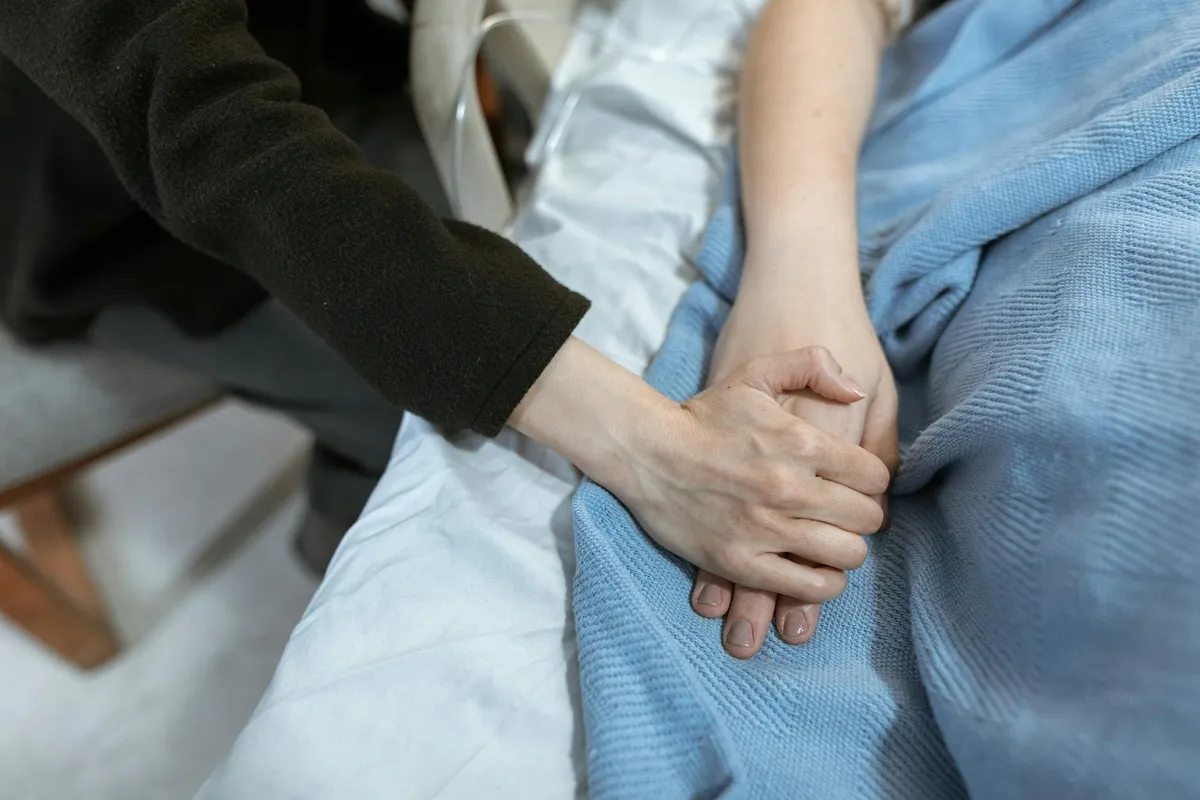
What she did not expect was how gentle the weeks that followed would be. Her father stayed in his room at the care home, in the bed he had slept in for two years, surrounded by the staff who knew his name and his habits. The hospice team came to him. He died six weeks later, in that same room, with a caregiver holding one hand and Helen holding the other.
This is what hospice can look like in a small residential care home. It is not what most families picture when they hear the word.
What hospice is, and what it is not
Hospice is a philosophy of care, not a place. It is the decision to stop pursuing curative treatment for a terminal illness and to focus entirely on comfort, pain management, and quality of life for whatever time remains.
Hospice is not giving up. It is not abandonment. It is not a morphine drip in a dark room. It is a fully funded medical benefit that provides a team of professionals whose only job is to make the end of life as comfortable and dignified as possible.
The Centers for Medicare and Medicaid Services defines hospice as care for patients with a terminal prognosis of six months or less, delivered wherever the patient lives. That includes private homes, assisted living facilities, nursing homes, and small residential board and care homes. In 2022, more than 1.7 million Medicare beneficiaries received hospice services, according to the Medicare Payment Advisory Commission.
Most people associate hospice with dedicated inpatient facilities. Those exist, but they serve a small fraction of hospice patients. The vast majority of hospice care in the United States is delivered in the place where the person already lives.
How hospice works in a small care home
When a resident in a small care home enrolls in hospice, a hospice agency sends a team to the home on a regular schedule. The care home does not become a hospice facility. It remains a licensed residential care home with the same staff, the same meals, and the same daily routine. The hospice team layers its services on top of the care already being provided.
Here is how the two teams work together in practice.
The care home staff continues doing what they have always done: preparing meals, helping with bathing and dressing, managing the household, providing companionship, and monitoring the resident’s daily condition. They are the constant presence, 24 hours a day.
The hospice team provides medical oversight, pain management, emotional support, and specialized end-of-life expertise. They visit on a schedule and are available by phone around the clock for questions, symptom changes, or crises.
The two teams communicate daily. A good hospice nurse leaves detailed notes after every visit and calls the care home operator or lead caregiver to discuss any changes in the care plan. The care home staff, in turn, reports observations between visits, things like changes in appetite, sleep patterns, agitation, or pain behaviors. This partnership works best when both sides respect each other’s expertise.
In a small home with four to six residents, this coordination happens naturally. There is no shift change communication breakdown, no charting system that nobody reads. The caregiver who was with the resident at 3 a.m. is often the same person talking to the hospice nurse at 10 a.m.
The hospice team
A full hospice team includes more people than most families expect. Medicare’s hospice benefit requires the agency to provide all of the following.
Hospice physician or medical director. This doctor oversees the plan of care, certifies the terminal prognosis, and manages complex symptom issues. They may visit occasionally or consult by phone, depending on the patient’s needs and the agency’s staffing model.
Registered nurse. The hospice RN is the clinical backbone of the team. They visit the care home regularly, typically two to three times per week as the patient’s condition progresses, and more frequently during active decline. They assess symptoms, adjust medications, educate the care home staff on what to watch for, and communicate with the physician.
Home health aide. The hospice aide provides personal care like bathing, grooming, and repositioning. In a small care home, this role overlaps with what the care home staff already does. Good hospice agencies coordinate with the care home to avoid duplication and to provide the aide’s time where it adds the most value.
Social worker. The hospice social worker helps the family navigate emotional, financial, and practical concerns. They can connect families to grief counseling, help with advance directive paperwork, coordinate with the resident’s other providers, and serve as a sounding board during a profoundly difficult time.
Chaplain or spiritual counselor. Available regardless of the resident’s religious background or lack of one. The chaplain’s role is to support the resident and family through existential and spiritual questions that surface near the end of life.
Volunteers. Medicare requires hospice agencies to maintain a volunteer program. Volunteers may sit with the resident to give the family or care home staff a break, read aloud, play music, or simply be present. In a small care home, the volunteer becomes another member of the household during their visits.
Bereavement counselor. After the resident dies, the hospice agency is required to provide bereavement support to the family for at least 13 months.
The Medicare hospice benefit
Medicare Part A covers hospice care for eligible beneficiaries with no prior authorization required. The benefit is available to anyone who has Medicare Part A, has a terminal illness with a prognosis of six months or less (certified by a physician), and elects to receive hospice care instead of curative treatment for the terminal condition.
The benefit covers physician services, nursing visits, aide visits, social work, chaplaincy, medications related to the terminal diagnosis, medical equipment (hospital beds, wheelchairs, oxygen concentrators, commodes), medical supplies, short-term inpatient care for symptom management that cannot be handled at home, and up to five days of respite care in a Medicare-approved facility so the primary caregivers can rest.
There are two critical things Medicare’s hospice benefit does not cover in a care home setting.
First, it does not pay for room and board. The care home’s monthly fee for housing, meals, supervision, and personal care remains the family’s responsibility. This means the family is still paying the private-pay rate or, if the resident is on Medicaid, the Medicaid waiver rate continues.
Second, it does not cover treatment aimed at curing the terminal illness. If a resident has terminal cancer and enrolls in hospice, Medicare will not cover chemotherapy for that cancer. It will still cover treatment for unrelated conditions, a broken bone, for example, or antibiotics for a urinary tract infection.
For families wondering whether Medicare covers residential care more broadly, the hospice benefit is one of the few circumstances where Medicare pays for ongoing services in a care home setting, even though it does not cover the room and board itself.
When to ask about hospice
The formal eligibility requirement is a physician’s certification that the patient has a life expectancy of six months or less if the illness runs its normal course. In practice, the decision is rarely that clinical.
The conversation usually starts when curative treatment is no longer working, when the resident is declining despite interventions, or when the burden of treatment outweighs the benefit. Common indicators include repeated hospitalizations with diminishing recovery, progressive weight loss and loss of appetite, increasing dependence on assistance for all daily activities, difficulty swallowing or recurrent aspiration, frequent infections, and a general trajectory of decline over weeks or months.
The National Hospice and Palliative Care Organization reports that the median length of stay in hospice is roughly 18 days. Many physicians and families agree this is far too short. Enrolling earlier, weeks or months before death, gives the resident more time to benefit from pain management, emotional support, and the coordinated care that hospice provides.
If you are staying involved in your parent’s care at a small home, do not wait for the care home operator or physician to bring it up. Ask the question yourself. “Is it time to think about hospice?” is never the wrong question to ask.
A geriatric care manager can be especially helpful in navigating this decision. They understand the clinical indicators, know the local hospice agencies, and can advocate for the resident’s comfort when family members are too close to the situation to think clearly.
How to choose a hospice agency
Not all hospice agencies are the same. Quality varies, and the choice matters enormously.
Start with the care home operator. Experienced operators have worked with multiple hospice agencies and have strong opinions about which ones communicate well, respond quickly, and treat the care home staff with respect. Their recommendation carries weight.
Then do your own research.
Check quality data. Medicare’s Care Compare tool publishes quality ratings for every Medicare-certified hospice agency. Look at the quality of patient care score, the family experience of care score, and whether the agency has had any recent deficiency citations.
Ask about response times. When a resident is in pain at 2 a.m. and the care home staff calls the hospice nurse, how quickly does someone respond? The best agencies have a nurse available by phone within minutes and can send someone to the home within an hour for urgent situations.
Ask about continuous care. Medicare’s hospice benefit includes a provision called continuous home care, which means a hospice nurse or aide stays at the bedside during a period of medical crisis. Not all agencies provide this reliably. Ask specifically whether they offer it and how often they have provided it in the past year.
Ask about the care plan process. How does the agency develop and communicate the plan of care? Will the family receive a copy? How often is it updated? How will the hospice nurse communicate with the care home staff after each visit?
Meet the team. Before enrolling, ask to meet the nurse and aide who will be assigned to your parent. Trust your instincts about whether they are kind, competent, and genuinely present.
The care home operator’s role during hospice
When a resident enrolls in hospice, the care home operator’s role shifts. They are no longer the primary decision-maker about the resident’s medical care. That responsibility moves to the hospice team. But the operator remains central to the resident’s daily experience.
The operator and their staff continue providing personal care, meals, housekeeping, companionship, and 24-hour supervision. They become the eyes and ears of the hospice team between visits, reporting changes in the resident’s condition and following the hospice care plan for things like medication schedules, positioning, and comfort measures.
Good operators prepare for this transition long before it happens. They train their staff on end-of-life care basics: how to recognize signs of active dying, how to provide mouth care for someone who has stopped eating, how to reposition for comfort, how to talk to a dying person and their family. They establish relationships with hospice agencies before they need them. They keep advance directives and POLST (Physician Orders for Life-Sustaining Treatment) forms on file and readily accessible.
If you are evaluating a care home for a parent who may need end-of-life care, ask the operator directly: “How many residents have died in this home? What was that experience like? Which hospice agencies do you work with?” An operator who answers these questions with ease and specificity is one who takes this part of the work seriously.
Advance directives and POLST forms
Before a crisis arrives, make sure the paperwork is in order.
Advance directives are legal documents that express the resident’s wishes about medical treatment if they become unable to communicate. They typically include a living will (which specifies what treatments the person does or does not want) and a durable power of attorney for health care (which names someone to make decisions on their behalf).
POLST forms (also called MOLST, MOST, or COLST depending on the state) are medical orders signed by a physician that translate the patient’s wishes into actionable instructions for emergency responders and care providers. They address questions like: Does this person want CPR? Does this person want to be transferred to a hospital? Does this person want IV fluids or antibiotics?
The National POLST organization maintains a directory of state programs. These forms are especially important in a care home setting because if 911 is called, paramedics are legally obligated to attempt resuscitation unless a valid POLST or DNR order is present.
Work with the hospice social worker, the resident’s physician, and your family to complete these documents early. Share copies with the care home operator, the hospice agency, the primary care physician, and any family members involved in care decisions. The care home should keep the POLST form in an immediately accessible location.
Comfort care and pain management
The core mission of hospice is comfort. In a small care home, comfort care takes on a particular quality because the setting is already home-like, personal, and familiar.
Pain management is the medical foundation. The hospice physician and nurse manage medications, typically including a combination of scheduled and as-needed (PRN) doses. In a care home, the staff administers these medications according to the hospice care plan. The hospice nurse trains the care home staff on what each medication does, when to give it, how to assess pain in someone who cannot communicate verbally, and when to call the hospice nurse for guidance.
Beyond medication, comfort in a small home means the things that matter to the individual person. It means the caregiver who knows that Mr. Davis likes his pillow a certain way. It means the sound of conversation from the kitchen, not the beeping of monitors. It means the cat who sleeps at the foot of the bed. It means meals that smell like someone’s home, even when the resident can no longer eat them.
This is where small homes have a genuine advantage over larger facilities. In an institution, end-of-life care happens in a shared or semi-private room, staffed by rotating aides who may not know the resident well, in an environment designed for efficiency. In a small home, the dying person is in their own room, attended by people who have cared for them daily, in a house that looks and feels like someone’s home, because it is.
The emotional experience
Dying in a small care home affects everyone in the household. This is one of the realities that families and operators must navigate with honesty and care.
For the family. Having a parent on hospice in a care home can bring a measure of peace that a hospital never provides. The family can visit without institutional visiting hours, sit in the garden, bring food, bring grandchildren, bring the family dog. They can sleep in the next room. They are not visitors in a medical facility. They are guests in their parent’s home.
At the same time, the informality of the setting can feel disorienting. There is no nurse’s station, no call button, no team of specialists down the hall. Families sometimes worry that the care home cannot handle what is coming. This is where the hospice team’s presence and the operator’s experience become essential reassurances.
For the other residents. In a home with four to six people, the decline and death of a housemate is visible and felt. Other residents may become anxious, sad, or withdrawn. Good operators acknowledge what is happening openly, within the bounds of the dying resident’s privacy, and provide emotional support to the other residents. Some homes hold a brief memorial or place flowers in the common area after a death.
For the care home staff. Caregivers in small homes form genuine bonds with residents. A death is a personal loss, not a line item. Operators should provide emotional support to their staff after a death, whether through conversation, a few hours off, or access to the hospice bereavement counselor. Burnout and grief accumulate in this work. Acknowledging that is not weakness. It is good management.
Signs that a care home handles end-of-life care well
When evaluating a small care home, look for these indicators that the operator and staff are prepared for this stage of care.
The operator talks about death without flinching. They can describe past experiences with residents who died in the home. They speak about it with warmth and competence, not avoidance.
The home has established hospice relationships. The operator can name specific hospice agencies they work with and explain why they prefer them.
Staff have received end-of-life training. Ask whether caregivers have completed any training in comfort care, palliative care, or recognizing signs of active dying.
Advance directive paperwork is part of the intake process. The operator asks about advance directives and POLST forms when a new resident moves in, not when a crisis happens.
The home environment supports privacy and quiet. There is a way to create a peaceful space around a dying resident, a private room, a door that closes, windows that open.
The operator supports the family’s involvement. Families are welcome at any hour during the dying process. There is space for a family member to sleep nearby. The operator communicates proactively about changes in condition.
There is a plan for the other residents. The operator can explain how they support other residents emotionally when a housemate is dying or has died.
If you are comparing care homes for a parent with a serious illness, these are not optional qualities. They are essential.
Why small homes can be especially good for end-of-life care
The qualities that make small residential care homes different from larger facilities, the personal attention, the consistent staffing, the home-like setting, the family atmosphere, matter most at the end of life.
A resident who has lived in a 6-bed home for two years knows the caregiver who makes breakfast. That caregiver knows the resident’s favorite music, their children’s names, the way they liked their coffee before they stopped drinking it. This is not a care plan. It is a relationship. And relationships are what carry people through the hardest transitions of life.
Research supports this. Studies published in the Journal of the American Geriatrics Society have found that smaller care settings are associated with higher family satisfaction with end-of-life care, in part because of the continuity of caregivers and the ability to maintain familiar routines.
Hospice was designed to bring the values of home to the dying process. In a small residential care home, it does not have to travel far.
What to do next
If your parent lives in a small care home and you are wondering whether hospice might be appropriate, start the conversation now. Talk to the care home operator about their experience with hospice and which agencies they recommend. Talk to your parent’s physician about the current trajectory. Talk to your family about your parent’s wishes.
If your parent is not yet in a care home but has a serious illness, consider whether a small residential home might be the right setting for this stage of life. Use our state directory to find licensed homes in your area, and read our guide to building a care team to understand how hospice fits into the larger picture of support.
The goal is not to plan for death. The goal is to plan for the best possible life in the time that remains. In a small care home, with the right hospice team, that is a realistic and achievable thing.