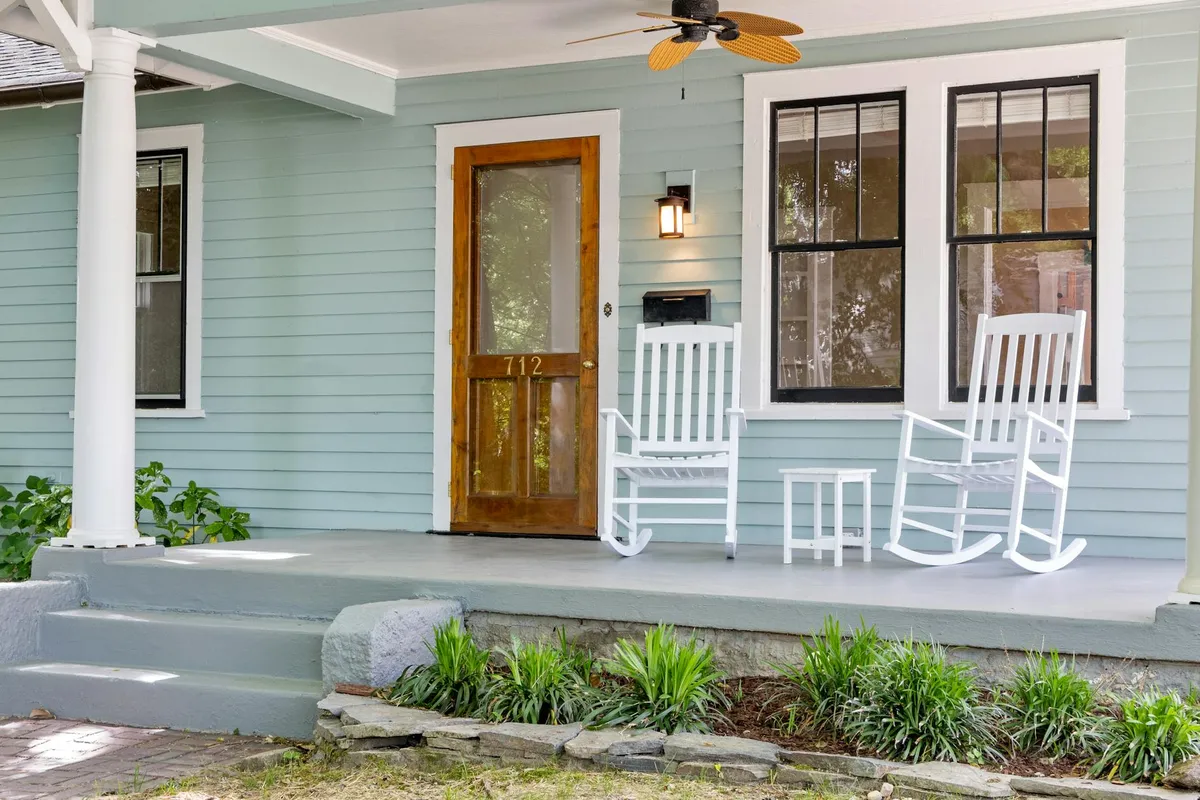
The house sits on a quiet street in East Nashville, two stories of red brick with a porch that wraps around the side. Inside, five older adults live together. One is a retired schoolteacher who moved in after a fall made living alone unsafe. Another is a former musician whose family lives three hours away in Chattanooga. The owner, a licensed nurse who left hospital work a decade ago, knows each resident’s preferences down to how they take their coffee. This is what residential care looks like in Tennessee when it works well: small, personal, rooted in a real neighborhood.
Tennessee calls these settings Assisted Care Living Facilities, or ACLFs. The state licenses 329 of them, ranging from homes with just a handful of beds to larger operations. For families searching for a small, home-like care setting for an aging parent, the small ACLF category is the right starting point. This guide covers what Tennessee law requires, what these homes cost across the state’s regions, how to pay for care, and how to find and evaluate a good home. For broader context on the small care home model, see our main board and care home guide.
How Tennessee defines and licenses care homes
Tennessee licenses Assisted Care Living Facilities under Tennessee Code Annotated 68-11-201. An ACLF is defined as a facility that provides residential care, personal care services, and supervision to adults who need assistance with activities of daily living but do not require the continuous skilled nursing care provided in a nursing home.
Small ACLFs, those with 12 or fewer beds, are the settings most similar to what other states call board and care homes, adult family homes, or personal care homes. They typically operate in converted single-family houses or purpose-built residential structures in regular neighborhoods. The resident-to-caregiver ratio tends to be low, meals are prepared in a home kitchen, and the daily rhythm feels more like a household than an institution.
What ACLFs provide
Licensed ACLFs in Tennessee are authorized to deliver:
- Room and board, including meals and housekeeping
- Assistance with activities of daily living (bathing, dressing, grooming, eating, mobility, toileting)
- Help with self-administration of medications
- Supervision and watchful oversight
- Social and recreational activities
- Coordination with outside medical providers, home health agencies, and hospice
ACLFs are not licensed to provide skilled nursing care. When a resident’s medical needs exceed what the facility can safely manage, the home must arrange a transfer to an appropriate setting or bring in supplemental services such as home health or hospice.
Adult Care Homes: a separate category
Tennessee also licenses a distinct category called Adult Care Homes, which are smaller residential settings that sometimes overlap in concept with ACLFs but operate under a different set of regulations. Adult Care Homes tend to be family-operated and serve a small number of residents. Families searching for the smallest, most home-like settings should look at both categories. The licensing database allows you to search by facility type to distinguish between the two.
For a broader look at how each state defines and regulates small care homes, see our 50-state licensing overview.
Licensing and regulation in detail
The Tennessee Department of Health, Health Care Facilities division is the licensing authority for ACLFs. The department sets minimum standards, conducts inspections, investigates complaints, and takes enforcement action when facilities fail to meet requirements.
Administrator and staff requirements
Tennessee requires ACLF administrators to:
- Be at least 21 years old
- Hold a high school diploma or equivalent
- Pass a criminal background check (including a Tennessee Bureau of Investigation check)
- Complete state-approved administrator training
- Demonstrate the ability to manage the facility and supervise staff
Direct care staff must complete orientation and training before working independently with residents. Training covers personal care techniques, medication assistance, infection control, emergency procedures, resident rights, and abuse and neglect prevention. Homes serving residents with dementia or cognitive impairment must ensure staff receive additional dementia-specific training.
Tennessee’s training requirements are comparable to those in neighboring states like Georgia and North Carolina, though they are less extensive than the Pacific Northwest states. The quality of care in any individual home depends more on the operator’s commitment to ongoing staff development than on minimum state requirements.
Staffing ratios
Tennessee regulations require that ACLFs maintain sufficient staff to meet the needs of all residents at all times, including overnight. Small homes often operate with one awake caregiver during the day and one awake or on-call caregiver overnight, with the owner or administrator frequently serving as part of the care team. The specific ratio depends on the number of residents and their acuity levels.
For families evaluating homes, staffing is one of the most important questions to ask about during a tour. Our guide to touring and evaluating care homes covers what to look for.
Inspections and enforcement
The Tennessee Department of Health inspects ACLFs at least annually as part of the license renewal process. Additional inspections occur in response to complaints, reported incidents, or follow-up on previously cited deficiencies. Inspection reports document what the surveyor observed, any regulatory violations, the severity of each finding, and the facility’s plan of correction.
Enforcement actions can include:
- Plans of correction (the most common outcome for minor deficiencies)
- Conditional licenses
- Civil monetary penalties
- Denial or revocation of the license
Inspection results are public. Families should review them before scheduling a tour.
How to search Tennessee’s facility database
The Tennessee Department of Health maintains an online facility listings database that includes ACLFs, Adult Care Homes, nursing facilities, and other licensed health care settings. You can search by facility type, name, city, county, or zip code.
Each listing shows the facility’s current license status, address, capacity, and contact information. Some inspection reports are available through the database; others may require a direct request to the department.
For families building a shortlist, this database is the essential starting point. Before scheduling a single tour, verify that every home on your list holds an active, unconditional license. Read any available inspection reports. Look for patterns: a single minor deficiency corrected promptly is different from repeated citations for the same issue.
The AgeSong state directory also includes Tennessee listings organized by city, with links to the official state records for verification.
Cost ranges across Tennessee
Approximate cost ranges for a private room in a small ACLF in Tennessee, with basic personal care assistance, as of 2026:
- Nashville metro area (Davidson, Williamson, Rutherford, Wilson counties): $4,000 to $7,000 per month. Higher-end neighborhoods like Belle Meade, Green Hills, and Franklin can run $5,500 to $8,000+.
- Memphis metro area (Shelby, Tipton, Fayette counties): $3,500 to $6,000 per month. Germantown and Collierville tend toward the higher end.
- Knoxville metro area (Knox, Blount, Anderson counties): $3,500 to $5,500 per month.
- Chattanooga area (Hamilton, Bradley counties): $3,500 to $5,500 per month.
- Clarksville, Jackson, Johnson City, and mid-size markets: $3,000 to $5,000 per month.
- Rural Tennessee: $2,500 to $4,500 per month.
These ranges cover basic personal care for a relatively independent resident. Memory care, behavioral support, and higher-acuity care needs typically add $1,000 to $2,000 per month. Some homes charge a one-time community fee or move-in fee in addition to monthly rates.
Tennessee is a relatively affordable state for residential care compared to both coasts, though Nashville prices have risen steadily with the city’s growth. For the broader national cost picture, see our cost guide.
Paying for care in Tennessee
TennCare CHOICES (Medicaid managed long-term care)
Tennessee operates its Medicaid program through TennCare, a managed care system. Within TennCare, the CHOICES program is the pathway for long-term services and supports for older adults and people with physical disabilities.
CHOICES has three groups:
- Group 1: Nursing facility services (for people living in nursing homes)
- Group 2: Home and community-based services for people who meet a nursing home level of care but choose to receive services in a community setting
- Group 3: Home and community-based services for people at risk of nursing home placement who do not yet meet the full nursing home level of care
Groups 2 and 3 are the relevant categories for ACLF residents. CHOICES can fund personal care services, attendant care, home-delivered meals, personal emergency response systems, and other supports. However, CHOICES does not pay the full cost of room and board in an ACLF. The program funds the service component while the resident is responsible for room and board, typically covered through income (Social Security, pension), SSI, or family contributions.
Eligibility requires meeting both financial criteria (income and asset limits consistent with Tennessee Medicaid rules) and clinical criteria (a functional assessment demonstrating the need for long-term care services). Application is through TennCare or the local Area Agency on Aging and Disability (AAAD).
The practical reality for most Tennessee families is that CHOICES provides helpful supplemental funding but rarely covers the full cost of ACLF placement. Most residents are primarily private-pay. For the full picture of how Medicaid covers residential care nationally, see our Medicaid guide.
Private pay
The majority of ACLF residents in Tennessee pay privately, combining Social Security income, pension benefits, savings, retirement account withdrawals, and family contributions. For families planning ahead, understanding the likely duration of stay and building a financial plan around it is important. Our guide to paying for care walks through the main funding sources.
SSI and state supplement
Tennessee residents who qualify for Supplemental Security Income (SSI) receive the federal SSI payment. Tennessee does not provide an additional state supplement to SSI, which means SSI alone rarely covers the full cost of ACLF care. In lower-cost rural markets, SSI combined with Social Security and other income sources may be sufficient. In Nashville or Memphis, it typically falls short.
VA Aid and Attendance
Tennessee has a large veteran population, and the VA Aid and Attendance benefit is a meaningful funding source for wartime veterans and their surviving spouses. The benefit can provide over $2,700 per month toward the cost of residential care. It can be combined with other income sources and does not count as income for most Medicaid purposes.
For veterans or surviving spouses, applying for Aid and Attendance should be one of the first steps in the financial planning process. The application takes several months to process, so starting early is important.
Long-term care insurance
If your parent holds a long-term care insurance policy, most policies issued in the last two decades cover residential care settings like ACLFs. Read the policy language carefully, call the insurer’s claims department, and ask specifically whether the Tennessee ACLF category qualifies. Most policies require a licensed setting and a demonstrated need for assistance with two or more activities of daily living or cognitive impairment.
Life insurance conversion and bridge loans
For families facing an immediate funding gap, some life insurance policies can be converted to long-term care benefit plans, and short-term bridge loans exist for families waiting on a home sale or VA benefit approval. These are specialized financial tools worth discussing with an elder law attorney or financial planner.
How to find and evaluate a good ACLF in Tennessee
The search process follows a predictable set of steps, adapted here with Tennessee-specific resources.
1. Define what you need. Start with a clear picture of your parent’s care needs, preferred location, and budget. Consider whether memory care is needed, what level of mobility assistance is required, and whether any medical conditions require specialized attention. Our care needs assessment can help you organize these factors.
2. Build a shortlist. Browse the AgeSong directory for Tennessee homes in your target city or county. Search the Tennessee Department of Health facility database for licensed ACLFs and Adult Care Homes in the area. Ask the local Area Agency on Aging for recommendations.
3. Verify each home in the state database. Before calling or visiting any home, confirm it holds an active, unconditional license. Read available inspection reports. Note any deficiencies, their severity, and whether they were corrected.
4. Phone-screen your shortlist. Call each home and ask about availability, cost, what is included in the monthly rate, staffing levels, and how they handle residents whose needs increase. Our guide to evaluating care homes includes a detailed phone-screening checklist.
5. Tour three to five homes in person. Walk through the entire house. Observe interactions between staff and residents. Note the cleanliness, the smell, the noise level, the quality of the food, and the general atmosphere. Does it feel like a home, or does it feel like a facility? Are residents engaged, or are they sitting passively in front of a television?
6. Make at least one unannounced visit. After your initial tour, return without an appointment, ideally during a meal or an evening. The unscheduled visit reveals more about daily reality than the planned tour.
7. Read the admission agreement carefully. Tennessee ACLFs are required to provide a written agreement that outlines the services included, the monthly rate, the terms for rate increases, the conditions under which a resident can be discharged, and the process for resolving disputes. Read every word. Ask questions about anything unclear. Consider having an elder law attorney review the agreement before signing.
8. Talk to families of current residents. If the operator allows it, speak with family members of people already living in the home. Their experience over months and years is the most revealing source of information.
What the Long-Term Care Ombudsman does
Tennessee’s Long-Term Care Ombudsman Program is administered by the Tennessee Commission on Aging and Disability. The ombudsman advocates for residents of long-term care settings, including ACLFs. Services include investigating complaints, mediating disputes between residents and facilities, providing information about residents’ rights, and helping families navigate the system.
The ombudsman service is free and confidential. If your parent is already living in an ACLF and you have concerns about the quality of care, the ombudsman is a resource worth knowing about.
Tennessee’s Area Agencies on Aging and Disability
Tennessee has nine Area Agencies on Aging and Disability (AAADs) that serve as regional hubs for aging services. Your local AAAD can help with:
- Information about licensed care homes in your area
- Referrals to CHOICES and other Medicaid programs
- Connection to the Long-Term Care Ombudsman
- Caregiver support services
- Benefits counseling
You can find your local AAAD through the Tennessee Commission on Aging and Disability or through the national Eldercare Locator at 1-800-677-1116.
Regional considerations
Tennessee’s geography and population distribution create distinct regional markets for residential care.
Nashville and Middle Tennessee have the most options and the highest prices. The city’s rapid growth has brought new homes into the market but has also driven up real estate costs, which operators pass along. Families searching in Nashville should expect to visit homes across several neighborhoods and price points.
Memphis and West Tennessee offer a moderate number of options at somewhat lower prices than Nashville. The Memphis metro area has a mix of established, long-running homes and newer operations.
Knoxville and East Tennessee provide a strong selection of small homes, many operated by families with deep roots in the community. The Smoky Mountain foothills and surrounding counties have some of the state’s most affordable options.
Chattanooga and the Southeast corner have a growing market for small residential care, with prices generally below Nashville but above rural areas.
Rural Tennessee offers the lowest costs but also the fewest choices. In some rural counties, the nearest licensed ACLF may be 30 or more minutes away. Families in these areas may need to expand their geographic search radius.
Planning for the transition
Moving a parent into residential care is one of the most emotionally complex decisions a family faces. Even when the move is clearly the right choice for safety and quality of life, it carries grief, guilt, and uncertainty. Tennessee’s small ACLFs, at their best, ease this transition by offering a setting that feels less like leaving home and more like joining a household.
For families preparing for this transition, our guide to the first 30 days in a care home covers what to expect and how to support your parent through the adjustment period. Our guide to managing guilt addresses the emotional side directly.
Browse the directory
The AgeSong state directory includes Tennessee listings organized by city, with links to the official state licensing records for verification. Browse to build your shortlist, then verify every home in the state database before scheduling tours.
The next step
If you are searching for a small care home in Tennessee, the most useful action this week is to call your local Area Agency on Aging and Disability. You can reach one through the Eldercare Locator at 1-800-677-1116. The intake conversation is free and will tell you what TennCare CHOICES options exist for your situation, which licensed ACLFs and Adult Care Homes operate near you, and what your next step should be.
For the broader search process, see our step-by-step guide to finding a care home, and for help understanding the financial picture, see our Medicaid guide and our guide to paying for care.
Sources and further reading: Tennessee Department of Health, Health Care Facilities; Tennessee Code Annotated 68-11-201; TennCare CHOICES program; Tennessee Commission on Aging and Disability; Tennessee Long-Term Care Ombudsman Program; Eldercare Locator; Centers for Medicare and Medicaid Services.