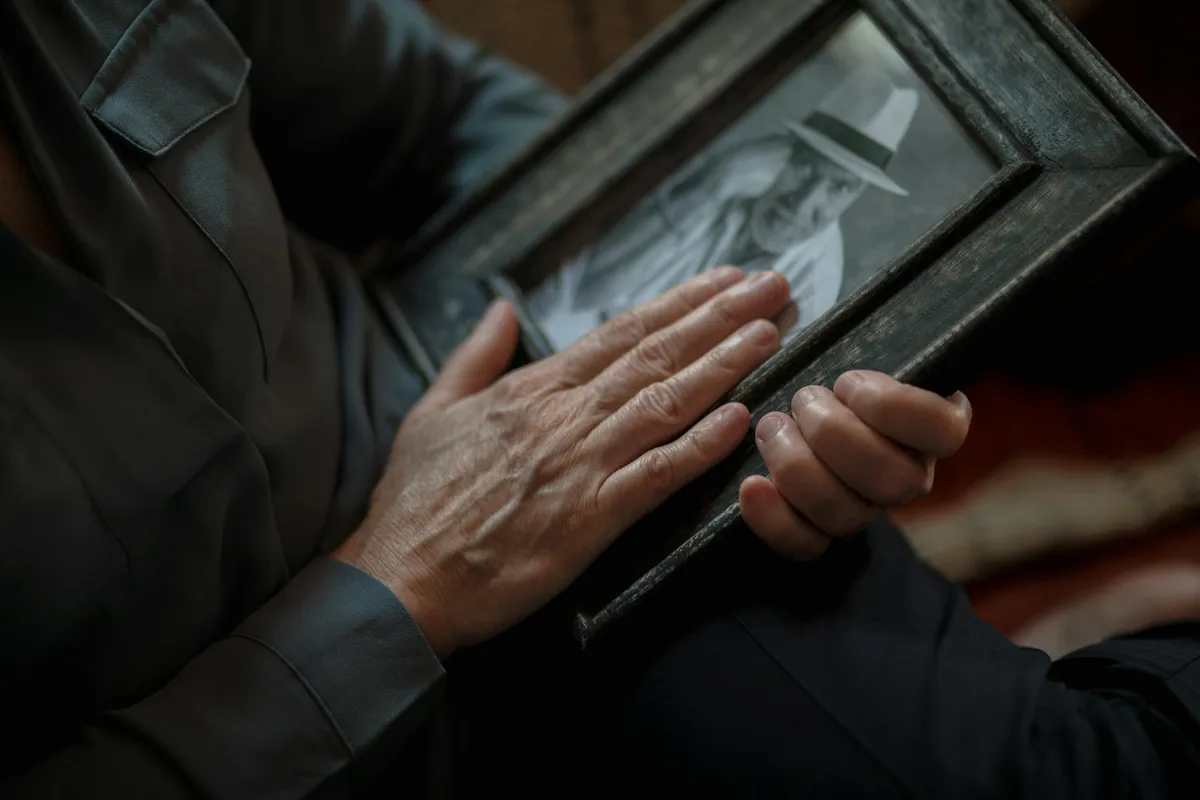
Margaret had been handling everything on her own for three years after Harold died. The mortgage was paid off. Social Security covered groceries and utilities. She managed. Then she fell in the hallway one Tuesday morning and lay there for two hours before the mail carrier noticed the front door was open. Her daughter flew in from Denver and within a week they were touring small care homes, doing the math on a legal pad at the kitchen table, and realizing that Margaret’s Social Security alone would not cover a monthly rate of $4,500.
What nobody mentioned, not the hospital social worker, not the home’s admissions coordinator, not even the elder law attorney who handled Harold’s estate, was that Margaret might qualify for a monthly VA benefit. Harold had served two years in the Army during the Korean War. He never saw combat. He never filed a VA claim in his life. But his service, and Margaret’s need for care, was enough to qualify her for a benefit that could pay more than $1,200 per month toward the cost of her care home, tax-free, for the rest of her life.
Stories like Margaret’s are common. The VA estimates that a significant majority of eligible surviving spouses never apply for pension benefits. The reasons are the same ones that keep veterans themselves from applying: the benefit is poorly publicized, the paperwork is intimidating, and the eligibility rules sound narrower than they actually are. This guide explains what the benefit is, who qualifies, how to apply, and where families go wrong.
What the Survivors Pension is
The VA Survivors Pension, formerly called the Death Pension, is a monthly cash benefit for low-income surviving spouses of wartime veterans. It is not related to a service-connected disability. The veteran does not need to have been wounded or to have filed a VA claim during their lifetime. The benefit is based on three things: the veteran’s wartime service, the surviving spouse’s financial need, and in some cases the surviving spouse’s need for personal care.
There are three tiers of the Survivors Pension, each paying a different amount:
Basic Survivors Pension. This is the base benefit for surviving spouses who meet the service, marital, and financial requirements. For 2026, the maximum annual rate is approximately $10,509, or about $876 per month.
Survivors Pension with Aid and Attendance. This is an enhanced benefit for surviving spouses who need help with activities of daily living (bathing, dressing, eating, toileting, transferring) or who are bedridden or in a care facility. For 2026, the maximum annual rate is approximately $14,742, or about $1,229 per month.
Survivors Pension with Housebound. This is a middle tier for surviving spouses who are substantially confined to their home or the area immediately around it due to a permanent disability but do not need hands-on personal care. For 2026, the maximum annual rate is approximately $12,442, or about $1,037 per month.
The amounts adjust annually with the federal cost-of-living increase. All three tiers are paid monthly, are tax-free, and can be used for any purpose, though most families apply them directly toward the cost of a residential care home, in-home care, or assisted living.
For a surviving spouse moving into a small care home where the monthly cost runs between $3,000 and $6,000, the Aid and Attendance enhancement can cover a meaningful share of the bill, especially when combined with Social Security and other income.
Who qualifies
Eligibility depends on four factors: the veteran’s service, the veteran’s discharge, the surviving spouse’s finances, and the surviving spouse’s care needs. All four must be met.
The veteran’s service
The deceased veteran must have served at least 90 days of active duty, with at least one day falling during a recognized wartime period. The wartime periods the VA recognizes are:
- World War II: December 7, 1941 through December 31, 1946
- Korean War: June 27, 1950 through January 31, 1955
- Vietnam War: February 28, 1961 through May 7, 1975 (for veterans who served in the Republic of Vietnam); August 5, 1964 through May 7, 1975 (for all others)
- Gulf War era: August 2, 1990 through a date to be set by law (this period is still open)
The veteran does not need to have served overseas, seen combat, or been stationed in a war zone. A veteran who enlisted in 1951, spent 90 days at Fort Benning, and was honorably discharged without ever leaving the United States meets the service requirement for the Korean War period. This is the part of the eligibility test that surprises the most families. Many assume their loved one “didn’t serve long enough” or “wasn’t really in the war,” when in fact the threshold is much lower than they expect.
For veterans who entered active duty after September 7, 1980, the minimum service requirement is 24 months of continuous active duty or the full period for which the veteran was called to active duty, whichever is shorter.
The veteran’s discharge
The veteran must have been discharged under conditions other than dishonorable. An honorable discharge meets this requirement. A general discharge under honorable conditions also meets it. A dishonorable discharge does not. If the discharge characterization is unclear, the VA will make a determination during the claims process.
The surviving spouse’s finances
The Survivors Pension is an income-based benefit. To qualify, the surviving spouse’s countable income must fall below the maximum annual pension rate for their tier, and their net worth must not exceed the VA’s asset limit.
For 2026, the net worth limit is approximately $155,356. This figure includes countable assets plus annual income. The VA excludes the primary residence (regardless of value), one vehicle, personal belongings, and certain other items from the calculation. Retirement accounts, savings accounts, investment accounts, and other liquid assets do count.
Here is where the math gets important. The VA subtracts unreimbursed medical expenses (known as UME) from countable income before comparing it to the pension rate. Unreimbursed medical expenses include the monthly cost of a care home, health insurance premiums, prescription copays, medical equipment, and other out-of-pocket health costs. For a surviving spouse paying $4,500 per month for a care home, that is $54,000 per year in unreimbursed medical expenses. If her Social Security income is $22,000 per year, her countable income after the UME deduction is effectively negative, which means the full pension amount is payable.
This is the single most important thing families miss when they look at the eligibility rules on paper. A surviving spouse whose income appears to be above the limit often qualifies once the cost of care is factored in as an unreimbursed medical expense. The seven ways to pay for care often work best in combination, and the Survivors Pension is one piece of a larger financial picture.
The surviving spouse’s marital status
The surviving spouse must have been legally married to the veteran at the time of the veteran’s death. The spouse must not have remarried, with one exception: if the surviving spouse remarried after the age of 57, the remarriage does not disqualify them from the pension. This exception was added by Congress to address situations where elderly surviving spouses remarried for companionship and then lost pension eligibility.
If the surviving spouse’s later marriage ended in death or divorce, they may also be eligible to reapply.
The surviving spouse’s care needs (for Aid and Attendance)
For the basic Survivors Pension, the surviving spouse does not need to demonstrate a care need. They only need to meet the service, discharge, and financial tests. For the Aid and Attendance enhancement, the surviving spouse must show that they need regular help with activities of daily living, are bedridden, are a patient in a nursing home, or are blind or nearly blind. Living in a licensed residential care home generally satisfies this requirement, as the VA considers residence in a care facility to be evidence of a need for assistance.
For the Housebound enhancement, the surviving spouse must show that they are substantially confined to their home or immediate premises due to a permanent disability.
The three-year look-back period
In October 2018, the VA implemented a three-year look-back period for asset transfers. This rule was designed to prevent applicants from giving away assets to qualify for the pension and then receiving taxpayer-funded benefits.
Here is how it works: if the surviving spouse (or the veteran, before death) transferred assets for less than fair market value within the three years before the pension application date, the VA may impose a penalty period during which no pension is payable. The penalty period is calculated by dividing the amount transferred by the maximum annual pension rate. For example, if the applicant gave $30,000 to a grandchild 18 months before applying, and the maximum annual pension rate is $14,742, the penalty period would be approximately 24 months.
The look-back rule applies to gifts, transfers to trusts (with some exceptions), and sales of assets below market value. It does not apply to the purchase of an irrevocable burial trust, payments for care that were actually received, or transfers to a spouse.
Families who are considering a Survivors Pension application should review any asset transfers from the prior three years before filing. An elder law attorney can help determine whether any transfers would trigger a penalty and whether there are strategies to address the situation. This is one area where professional advice can save months of delay.
How to apply
The application for the Survivors Pension is VA Form 21-534EZ, “Application for DIC, Death Pension, and/or Accrued Benefits by a Surviving Spouse or Child.” The name of the form is longer than the form itself, which is a modest improvement over earlier versions of the VA paperwork.
Documents you will need
Before starting the application, gather the following:
The veteran’s DD-214 (Certificate of Release or Discharge from Active Duty). This is the document that proves the veteran’s service dates, wartime period, and discharge characterization. If the family does not have a copy, one can be requested from the National Personnel Records Center (NPRC). Requests can be submitted online and typically take several weeks, though fire-damaged records from the 1973 NPRC fire may take longer or require alternative documentation.
The veteran’s death certificate. A certified copy from the county or state vital records office.
The marriage certificate. A certified copy showing the legal marriage between the veteran and the surviving spouse.
Financial records. Bank statements, investment account statements, Social Security benefit statements (SSA-1099), pension statements, and any other income documentation.
Medical evidence of care needs. For the Aid and Attendance enhancement, the VA needs evidence that the surviving spouse requires help with daily activities. A statement from the care home or a physician documenting the need for assistance is typically sufficient. If the surviving spouse is already living in a licensed care facility, the fact of residence is itself evidence.
Unreimbursed medical expense records. The monthly cost of the care home, insurance premiums, medication costs, and other out-of-pocket medical expenses. These reduce countable income and are critical to the benefit calculation.
Where to file
The application can be submitted online through va.gov, by mail to the VA Pension Management Center for the applicant’s region, or in person at a VA regional office. The online process is the fastest for initial submission, but many families find that working with an accredited representative produces a more complete application and fewer requests for additional evidence.
Processing times
The typical processing time is six to twelve months from the date of a complete submission. Incomplete applications take longer because the VA issues requests for additional evidence, and each round of correspondence adds weeks or months.
The benefit, once approved, is paid retroactively to the first day of the month following the application date. If a surviving spouse applies in March and is approved in November, the November payment will include a lump sum covering March through November. This retroactive feature means that applying sooner is always better, even if the application is not perfect on the first submission. Filing an intent to file (VA Form 21-0966) establishes the effective date immediately and gives the applicant one year to submit the complete application.
For applicants facing financial hardship, the VA offers an expedited processing option. Hardship claims are flagged for priority review, though the definition of hardship is at the VA’s discretion.
Common mistakes families make
Not claiming unreimbursed medical expenses
This is the most consequential error. The UME deduction is what makes the math work for most applicants. A surviving spouse whose Social Security income of $1,800 per month appears to exceed the pension rate will often qualify once the $4,000 or $5,000 per month care home cost is subtracted as an unreimbursed medical expense. Failing to include these expenses on the application means the VA calculates the benefit based on gross income, which may result in a denial or a much smaller payment. Every dollar of care home cost, insurance premium, and medical copay should be documented and reported.
Not understanding the look-back rule
Families sometimes give away assets or move money into a child’s name before applying, thinking this will help meet the net worth limit. If those transfers happened within three years of the application, they will trigger a penalty period. The better approach is to calculate whether the surviving spouse’s net worth, including the assets, is already below the $155,356 limit once the UME deduction is applied. In many cases it is, and no transfer is necessary.
Paying someone to file
The VA accreditation system exists for a reason. Accredited Veterans Service Organizations (VSOs), accredited attorneys, and accredited claims agents are the only people legally authorized to assist with VA pension claims. Many of them provide this assistance for free. The VFW, American Legion, Disabled American Veterans (DAV), and state and county veteran service officers all offer free claims assistance.
The VA has taken enforcement action against unaccredited companies that charge surviving spouses hundreds or thousands of dollars to file pension applications. Some of these companies also engage in asset-shifting schemes that trigger look-back penalties. The rule of thumb is simple: if someone is charging you money to file a VA pension claim, ask whether they are VA-accredited. If they are not, walk away.
Waiting too long to apply
Because the benefit is retroactive to the application date, there is no financial reason to wait until everything is perfect before filing. An intent to file establishes the effective date, and the full application can follow within a year. Families who spend months gathering documents before filing lose months of retroactive benefits. File the intent to file first, then gather documents.
Assuming the veteran’s service does not count
Many surviving spouses never apply because they assume their husband or wife “wasn’t really a veteran” or “didn’t serve long enough.” If the veteran served 90 days of active duty with one day during a wartime period and received a discharge other than dishonorable, the service requirement is met. Peacetime stateside service during a wartime period counts. Reserve or National Guard service counts if the member was called to active duty. When in doubt, check with a VSO. The DD-214 will show the dates.
How the benefit fits into a larger plan
The Survivors Pension is rarely enough on its own to cover the full cost of a care home. At approximately $1,229 per month for the Aid and Attendance tier, it covers roughly a quarter to a third of the typical small care home rate. But combined with Social Security, personal savings, and other resources, it can be the piece that makes the financial plan work.
For families weighing the full range of options, the guide to paying for care covers Medicaid, long-term care insurance, life insurance conversions, family cost-sharing agreements, and other strategies. The Survivors Pension works alongside most of these. It is compatible with Medicaid in many states, though the VA benefit may be counted as income for Medicaid eligibility purposes. An elder law attorney can help coordinate the two programs.
For families exploring bridge financing to cover the gap between the application date and the first benefit payment, the retroactive feature of the Survivors Pension provides some reassurance. The money will come eventually, even if the first six to twelve months require alternative funding.
The VA Aid and Attendance guide covers the benefit from the veteran’s perspective in more detail, including benefit amounts for married veterans, single veterans, and two-veteran couples. Much of the eligibility framework is the same, and families may find it useful to read both guides.
Where to get free help
The following organizations provide free assistance with Survivors Pension applications:
Veterans Service Organizations (VSOs). The VFW, American Legion, DAV, Vietnam Veterans of America, AMVETS, and other VSOs have trained, accredited claims representatives who help surviving spouses file applications, gather evidence, and appeal denials. Most local posts can connect you with a representative, and the national organizations maintain regional offices near VA facilities.
State and county veteran service officers. Every state has a Department of Veterans Affairs or equivalent agency, and most counties have a veteran service officer whose job is to help veterans and their families access benefits. These officers are often the most accessible resource for families in rural areas. A web search for “[your county] veteran service officer” will usually turn up a phone number and office address.
The VA itself. The VA’s toll-free benefits hotline (1-800-827-1000) can answer basic questions, and VA regional offices provide in-person assistance. Wait times vary.
Legal aid organizations. Some legal aid societies and law school clinics offer free assistance with VA pension claims, particularly for low-income applicants. The National Veterans Legal Services Program maintains a directory of free legal resources for veterans and surviving spouses.
When to apply
The best time to apply is now. If a surviving spouse is already living in a care home, every month without an application on file is a month of retroactive benefits lost. If a surviving spouse is considering a move to a care home, filing an intent to file before the move preserves the effective date. If a surviving spouse is unsure whether they qualify, a conversation with a VSO or county veteran service officer costs nothing and takes less than an hour.
The process is slow. The paperwork is real. But the benefit, once approved, is a permanent monthly payment that continues for the rest of the surviving spouse’s life, and it can mean the difference between affording a good care home and running out of money. For families watching their resources shrink, the guide to what happens when money runs out is honest about the options. The Survivors Pension is one way to push that day further into the future, or avoid it entirely.
Harold served his country for two years in 1952 and 1953. He never talked about it much. He never filed a VA claim. But his service, decades later, may be the thing that keeps Margaret in a home where someone checks on her every morning, where meals are cooked in a real kitchen, and where she does not have to lie on the hallway floor for two hours waiting for someone to notice. That is what the benefit is for. The only step is to apply.