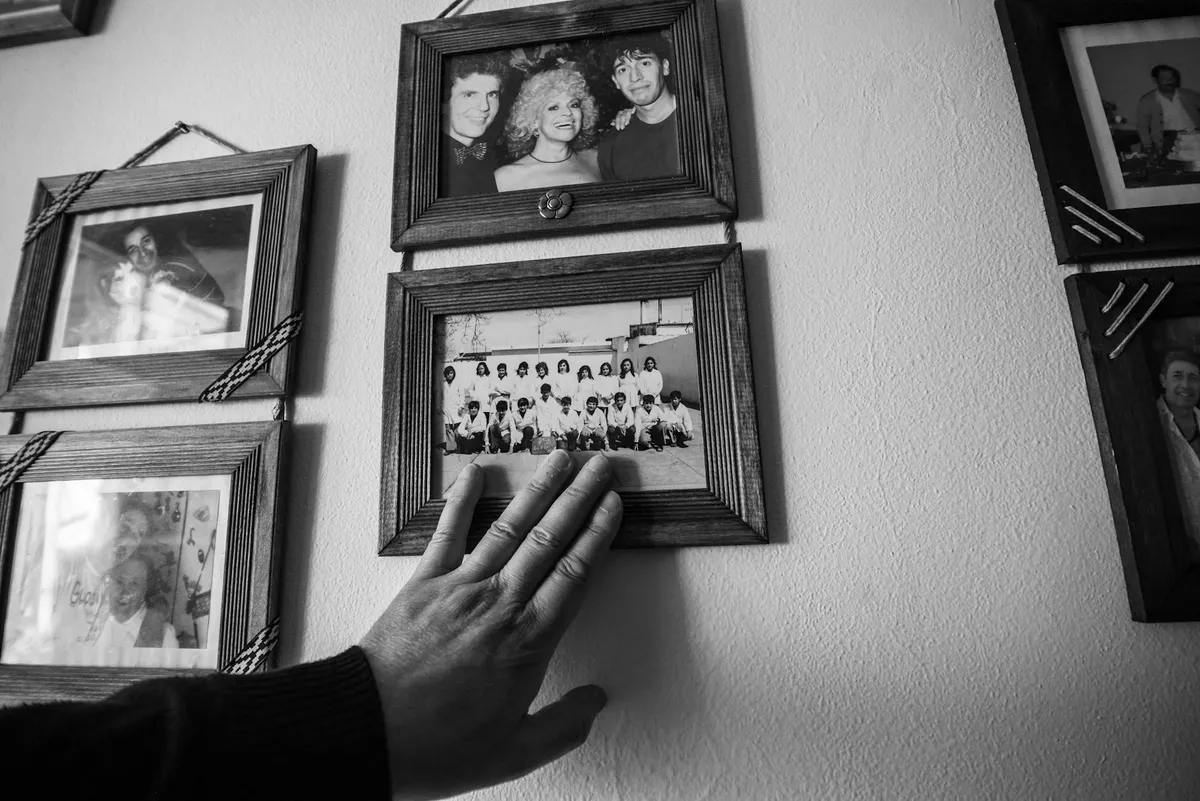
The morning routine was always the same. Helen’s mother would shuffle into the kitchen around seven, pour herself a cup of coffee, and sit in the same chair by the window. She had done it for forty years. Then the diagnosis came, and within a year the coffee went cold on the counter more often than not, the chair was sometimes a stranger’s chair, and Helen found herself standing in the kitchen at two in the morning wondering whether her mother had just tried to leave the house in her slippers. The neurologist said the word “placement.” A social worker mentioned memory care. Helen pictured a locked ward, fluorescent lights, a hallway lined with closed doors. She did not yet know there was another option.
If your family is in the middle of a conversation like Helen’s, this guide is for you. Small residential care homes, the kind that operate in ordinary houses on ordinary streets, can provide memory care in a setting that looks and feels nothing like the institutional picture many families carry in their heads. Not every small home is equipped for dementia. Not every person with dementia is right for a small home. But for many families, this is the option they did not know existed, and it changes everything.
What memory care actually means
Memory care is not a single, standardized level of care. It is a broad term that describes any setting designed specifically for people living with Alzheimer’s disease, vascular dementia, Lewy body dementia, frontotemporal dementia, or other conditions that cause progressive cognitive decline. The National Institute on Aging uses the term to describe residential settings that offer specialized programming, safety measures, and trained staff to support people whose memory, judgment, and ability to perform daily tasks are diminishing over time.
In practice, memory care means a few specific things. It means that the environment is designed to reduce confusion and prevent wandering. It means that staff have training in how to communicate with someone who cannot always find the right words, how to redirect someone who is agitated, and how to help someone with bathing and dressing without turning it into a confrontation. It means that daily routines are consistent, because consistency is one of the most effective tools for reducing anxiety in a person with dementia. And it means that someone is present and attentive around the clock, because dementia does not follow a schedule.
What memory care does not necessarily mean is a locked unit in a large building. That is one model, and it serves an important role. But it is not the only model, and for many families it is not the best fit.
Why small homes can be especially good for dementia
The research on dementia care environments points consistently in one direction: smaller is often better. A study published in the journal BMC Geriatrics found that residents in small-scale homelike care settings showed lower levels of agitation, better social engagement, and higher quality of life compared to residents in traditional large-scale nursing facilities. The Alzheimer’s Association notes that a calm, structured environment with familiar routines can help people with dementia feel safer and function better.
There are several reasons why small residential homes tend to work well for residents with memory loss.
Less sensory overload. A large memory care unit might have 40 or 50 residents on a single floor, with intercoms, televisions in common areas, staff moving through hallways, and the ambient noise of an institutional building. For a person whose brain is already struggling to process sensory information, this can be overwhelming. A small home with four to eight residents is quieter. The sounds are the sounds of a house: a conversation in the next room, a pot on the stove, a door opening. The difference matters more than many families expect.
Consistent caregivers. In a large facility, staff rotate through shifts, and a resident may interact with a dozen different faces in a single week. In a small care home, the same one or two caregivers are often present every day. They learn the resident’s habits, preferences, fears, and triggers. They know that Margaret gets anxious around sundown and that sitting with her for ten minutes with a cup of tea is more effective than any medication. They know that Robert does better when he helps fold towels after lunch because he spent thirty years working in a laundry. This kind of knowledge is built through relationship, not through a care plan binder. Who actually lives in these homes and how they spend their days varies, but the thread that connects the best small-home care is this consistency.
A real home environment. People with dementia often retain long-term memories and deeply ingrained habits long after short-term memory fails. A kitchen table, a living room couch, a garden visible through a window: these are environments that connect to something still intact. Institutional hallways with numbered doors and overhead paging systems do not. The physical environment of a small care home, an actual house, can provide what researchers call “environmental cues” that support orientation and reduce confusion.
Higher staff-to-resident ratios. A small home with six residents and two caregivers on duty has a ratio of one caregiver to every three residents. A large memory care unit with 40 residents and eight aides has a ratio of one to five. Both are within typical licensing requirements, but the practical difference is significant. In the small home, a caregiver can sit with a resident who is having a difficult afternoon. In the large facility, that same caregiver may need to keep moving because there are five other residents who also need attention.
Less exposure to illness. Respiratory infections, stomach viruses, and other communicable illnesses spread more easily in large congregate settings. The Centers for Disease Control and Prevention has documented the particular vulnerability of older adults in group residential settings. A home with six residents has a fundamentally different risk profile than a facility with 100.
What daily life looks like
A good small home providing memory care builds its entire day around routine. This is not a limitation. It is the point. Predictability is therapeutic for a person with dementia, and the small home’s structure makes it possible to provide that predictability in a way that feels natural rather than regimented.
A typical day might look like this. Residents wake up at their own pace. There is no institutional breakfast hour. A caregiver helps those who need assistance with dressing and grooming, taking the time that each person requires rather than rushing through a list. Breakfast happens at the kitchen table, with the same seats, the same faces, and food that was cooked in the kitchen that morning. After breakfast, there is usually some form of gentle activity: a walk in the garden if the home has one, a simple game, music, looking through photograph albums, or just sitting together in the living room with the television off and the windows open.
Lunch follows. Afternoons often include a rest period, because fatigue increases confusion and people with dementia tire more easily. Late afternoon brings another round of light activity, timed to coincide with the “sundown” hours when agitation often peaks. Dinner is around the table again. Evenings are quiet. Bedtime routines are individualized.
What you will not see in a well-run small memory care home is a printed activity calendar with bingo and crafts scheduled in 30-minute blocks. You will not see residents parked in wheelchairs in front of a television for hours. You will not see staff rushing. The pace is the pace of a household, and for someone whose internal clock is already uncertain, that unhurried rhythm is more valuable than any organized program. For a fuller picture of what the hours look like, our guide to a typical day in a small care home walks through the details.
How states license memory care in small homes
Licensing for memory care in small residential homes varies considerably from state to state. There is no single federal standard. Each state defines its own rules about what a small home can and cannot do for residents with dementia, what training staff must complete, and what physical safety features the home must have.
California licenses small residential care homes as RCFEs (Residential Care Facilities for the Elderly) through the Department of Social Services, Community Care Licensing Division. An RCFE can serve residents with dementia, but if the home accepts residents with “serious cognitive impairment” who require secured perimeters or specialized programming, it must obtain a memory care waiver or meet additional requirements under state law. Staff in these homes must complete specific dementia training hours. California has one of the largest networks of small care homes in the country, with thousands of licensed RCFEs in the six-bed range. Browse California’s directory to see what is available in your area.
Washington licenses small homes as Adult Family Homes through the Department of Social and Health Services. Washington’s system is well-developed for dementia care. Homes that serve residents with dementia must meet specific training requirements and can receive a specialty designation for dementia care. Adult family homes serve a maximum of six to eight residents, and many in Washington focus exclusively on memory care. Washington’s directory on AgeSong lists licensed homes throughout the state.
Arizona licenses small assisted living homes through the Arizona Department of Health Services. Homes serving residents with dementia must meet additional requirements for staff training and physical safety, including secured premises for residents at risk of wandering. Arizona’s system allows homes of up to ten beds, and the state has a growing number of small homes that specialize in dementia. See listings in Arizona.
Other states have their own frameworks. The common thread is that most states allow small residential homes to care for residents with dementia, but many require additional licensing endorsements, staff training, or physical modifications. Before choosing a home, verify with the state licensing agency that the specific home is authorized to provide dementia care. If you are not sure what a board and care home is or how it is regulated in your state, start there.
What to look for when touring for memory care
Touring a small care home with your parent’s dementia in mind is different from touring for someone who is cognitively intact. The questions are different, and so is what you should be watching for. Our complete list of questions to ask when visiting covers the general tour, but here are the things that matter most for memory care specifically.
Ask about dementia-specific training. Every caregiver in a memory care setting should have completed training in dementia communication techniques, behavioral management, and understanding the progression of the disease. Ask how many hours of training each caregiver has completed and whether the training is ongoing. Some states mandate specific hours. Others leave it to the operator. The answer tells you a great deal about how seriously the home takes memory care.
Watch the caregivers with the residents. Forget the brochure. Forget the operator’s description. Watch what actually happens during your visit. Do the caregivers make eye contact? Do they speak slowly and clearly? Do they touch residents gently and with permission? Do they redirect a confused resident with patience, or do they correct and control? The way a caregiver responds to a moment of confusion tells you more than anything else about the quality of care in that home.
Look at the physical environment. Good memory care environments have clear sight lines so that staff can see residents easily. Exits are secured in a way that prevents wandering but does not feel like a prison. Lighting is even and natural, because shadows and glare increase confusion. Floors are not slippery. Bathrooms are accessible. The layout is simple enough that a resident can find the bedroom, the bathroom, and the kitchen without navigating a maze. Some homes use color coding or visual cues to help with orientation.
Ask about wandering. Wandering is one of the most dangerous behaviors associated with dementia. According to the Alzheimer’s Association, six in ten people with dementia will wander at some point. Ask the operator what physical safeguards the home has: door alarms, secured yards, monitoring systems. Ask what happens if a resident does leave the property. Ask whether the home has had a wandering incident and how it was handled. A good operator will answer honestly.
Ask about behavioral approaches. People with dementia sometimes become agitated, anxious, or aggressive. Ask the home how it handles these moments. The best small homes use what clinicians call “person-centered” approaches: understanding the trigger, redirecting, adjusting the environment, and using the relationship between caregiver and resident to de-escalate. Ask specifically about the home’s approach to medications for behavior management. Overmedicating residents with antipsychotics to manage behavior is a well-documented problem in dementia care. The Centers for Medicare and Medicaid Services has made reducing unnecessary antipsychotic use a national priority. A small home that relies on relationships and routine rather than medication is doing it right.
Ask about progression. Dementia is a progressive disease. The person your parent is today is not the person your parent will be in two years. Ask the operator what happens as the disease advances. Can the home support a resident who becomes incontinent? Who can no longer walk? Who can no longer feed themselves? Some small homes can provide care through the end of life. Others have a point at which they ask families to find a higher level of care. Knowing where that line is before you move in saves you from a crisis later.
When a small home is no longer enough
This is the hardest section of this guide, but it is also one of the most important. Small residential care homes can provide excellent memory care through early, moderate, and in many cases advanced stages of dementia. But there are situations in which a small home reaches the limits of what it can safely and legally provide.
Medical complexity. As dementia advances, other medical conditions often intensify. If a resident develops needs that require skilled nursing, such as feeding tube management, complex wound care, or frequent IV medications, a small care home may not have the licensure or the staffing to provide that care safely. Many homes partner with hospice providers to extend what they can offer in the final months of life, and hospice in a small home can be a profoundly good experience. But some medical situations genuinely require a skilled nursing facility.
Safety risks to other residents. In rare cases, a person with dementia may become physically aggressive in ways that put other residents at risk. In a home with four to six residents and one or two caregivers, a resident who regularly strikes, pushes, or grabs other residents creates a safety situation that the home may not be able to manage without compromising care for everyone.
Staffing limitations. A resident who requires two-person assistance for every transfer (bed to chair, chair to bathroom, bathroom to bed) needs a level of staffing that some small homes cannot sustain. If the home has one caregiver on overnight shift and the resident needs to be repositioned by two people every two hours, the math does not work.
The decision to move a parent from a small home they have come to know into a larger facility is painful. It does not mean the small home failed. It means the disease progressed. If you are facing this transition, our guide on the first 30 days in a new care setting may help you prepare for what comes next.
Cost considerations for memory care
Memory care in a small residential home generally costs more than standard room and board in the same type of home, because it requires more staff training, more intensive supervision, and often physical modifications to the property. But it is frequently less expensive than a dedicated memory care unit in a large assisted living community.
Nationally, memory care in a large facility averages between $5,000 and $7,500 per month, with costs in high-cost metro areas running well above $8,000. The Genworth Cost of Care Survey, one of the most widely cited data sources in senior care, tracks these figures annually. Small residential homes providing memory care typically fall in the range of $5,000 to $10,000 per month, depending on the state, the region, the level of care, and whether the resident has a private or shared room.
Some homes charge a flat monthly rate that includes memory care. Others charge a base rate with an additional fee for residents who need dementia-level supervision. It is important to ask how the home handles cost increases as the disease progresses. If your parent enters the home at an early stage of dementia and three years later requires full assistance with all activities of daily living, will the rate change? By how much? Get this in writing.
Payment sources for memory care in small homes are similar to those for any small care home. Private pay (out-of-pocket or from savings and assets) is the most common source. Long-term care insurance often covers residential care homes, including memory care, though policies vary. VA Aid and Attendance benefits can help qualifying veterans and surviving spouses. In some states, Medicaid waiver programs cover residential care for eligible individuals, though the availability, waiting lists, and daily rates vary widely.
For a broader look at what care in a small home costs and how to pay for it, our complete cost guide covers the details state by state.
The conversation most families need to have
If you are reading this guide, you are probably somewhere in the middle of a difficult process. Maybe your parent has just been diagnosed. Maybe the diagnosis was years ago and you have been managing at home, and it is getting harder. Maybe something happened, a wandering episode, a fall, a moment of confusion so severe that it scared everyone, and you are realizing that the current situation cannot continue.
The decision to move a parent with dementia into a care setting is not just a logistical one. It is emotional in ways that logistics cannot touch. Guilt, grief, relief, fear: these come in waves and they come for everyone. Our guide on managing the guilt that comes with placing a parent addresses this directly, because it is a real and important part of the process.
What this guide is meant to help you see is that “memory care” does not have to mean the thing you are most afraid of. It does not have to mean a locked unit in a building that smells like disinfectant. For many families, memory care means a house on a quiet street, a caregiver who knows your mother’s name, a kitchen table where she sits in the same chair every morning with a cup of coffee. It means someone is watching, someone is trained, and someone is there at two in the morning when she tries to walk out the front door in her slippers.
Your next step
Start by understanding what is available in your state. Browse the AgeSong directory for board and care homes and filter for homes in your area. When you call, ask directly whether the home accepts residents with dementia and what dementia-specific training its staff have completed. Schedule visits to at least three homes. Bring the questions from this guide and from our touring checklist. Watch the caregivers with the residents. Trust what you see more than what you are told.
Your parent deserves care that meets them where they are, not where a facility’s floor plan happens to put them. A small home might be exactly the right place.