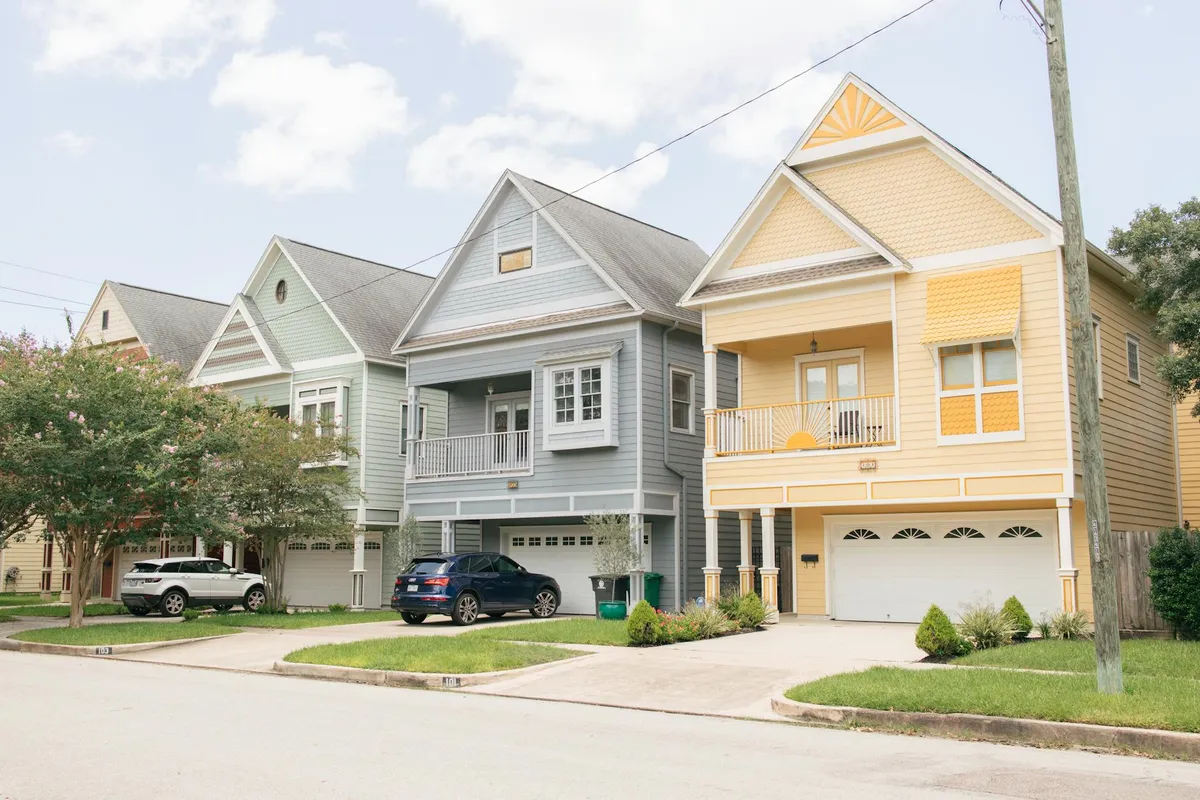
If you have spent any time looking at small residential care homes in different parts of the country, you have probably had this experience: you search for “board and care home near Seattle” and you mostly get results for “adult family home near Seattle” instead. You search for “adult family home in California” and you mostly get results for board and care or RCFE. The terminology changes as you cross state lines, and the change is not just cosmetic.
This guide explains what is the same, what is different, and why it matters when you are searching across states or comparing options for an aging parent.
The short answer
Adult family homes (the Washington term) and board and care homes (the California term, informally) describe the same basic kind of setting: a small licensed residential care home, in an ordinary house, where four to six older adults live together and receive help with daily activities. The model is essentially the same. The licensing rules, the maximum capacity, the staff training requirements, and the specific rules for medications and care are different because each state writes its own residential care licensing law.
Knowing the differences helps you compare apples to apples when you are looking at homes in two different states, or when you are trying to understand what a home in your state can and cannot legally do.
A side-by-side overview
| Topic | Washington adult family home | California RCFE (board and care) |
|---|---|---|
| Maximum residents | 6 | 6 most common, up to 15 in the small category |
| Licensing agency | DSHS, Aging and Long-Term Support Administration | CDSS, Community Care Licensing Division |
| License type | Adult Family Home (AFH) | Residential Care Facility for the Elderly (RCFE) |
| Provider training | Caregiver and HCA certification, dementia and mental health specialty training | Administrator certification, ongoing CEUs |
| Overnight staffing | Required, typically awake or immediately available | Required, with rules varying by acuity |
| Medicaid waivers | Well-established (COPES, Community First Choice) | Limited (Assisted Living Waiver in some counties) |
| Inspection records | Public via DSHS Provider Lookup | Public via CCLD facility search |
The table simplifies a lot, but it gives you the structural picture. Now let us walk through what each row actually means in practice.
Capacity and household feel
A Washington adult family home is capped at six residents by law. This is a hard cap, not a typical size. Every adult family home you tour in Washington will have at most six bedrooms (sometimes shared) and a household that operates on a household scale. The result is a remarkably consistent product from one home to another in terms of size and feel.
A California RCFE has a much wider range. The “small” RCFE category, which is what most families are looking for when they say “board and care home,” runs from a single bed (a tiny home with one resident) up to 15 in some configurations. Six is the most common, but you will also find homes with eight, ten, or twelve residents. The eight-bed and ten-bed RCFEs feel quite different from the six-bed homes. They are still small relative to a 100-resident assisted living community, but they have more staff, more rooms, more dining seats, and a slightly more programmatic rhythm. Some families prefer the bigger small homes for the sociability. Others prefer the six-bed homes for the intimacy.
If household feel is the main thing you are optimizing for, a Washington adult family home is probably going to feel more like a household than even a small RCFE in California, simply because the cap is lower and consistent.
Staff training and certification
This is one of the most consequential differences. Washington’s adult family home program has some of the most extensive caregiver training requirements in the country. Caregivers must complete state-approved Home Care Aide certification, dementia specialty training (if the home is licensed for dementia care), mental health specialty training (if licensed for mental health), and ongoing continuing education. The provider, who often lives on-site, has additional administrator-level training requirements. The state publishes the requirements on the DSHS adult family home page.
California requires RCFE administrators to be certified through a state-approved training program and to maintain continuing education. Direct caregiver training requirements exist but are less extensive than Washington’s. This does not mean California caregivers are untrained. Many are very experienced. It does mean that the state-mandated baseline is different.
For families who place a high value on documented, state-mandated training, Washington’s framework is more rigorous. For families who place a high value on the operator’s specific track record, the state-mandated baseline matters less and the individual home’s history matters more.
Medicaid and the small-home model
Washington is one of the relatively few states where Medicaid is a meaningful funding source for adult family home care. Through the COPES program and the broader Community First Choice option, eligible Washington residents can use Medicaid to help cover the cost of adult family home care. Not every home accepts Medicaid placements, and the waitlists vary by region, but the infrastructure is there. This is a major reason adult family homes are so well-established in Washington as a setting for residents who do not have substantial private resources.
California has a more limited Medicaid pathway for RCFE care. The Assisted Living Waiver is available in some counties and does cover certain RCFE services, but capacity is limited and waitlists can be long. Most California RCFE residents are private-pay, supplemented in some cases by long-term care insurance, VA benefits, or family contributions. We walk through all of these funding sources in our Medicaid guide and our seven ways to pay guide.
If your search is in Washington, Medicaid is worth investigating early in the process. If your search is in California, plan on private-pay as the default and treat Medicaid as a possible later-stage option.
Inspection records and transparency
Both states publish inspection and complaint records for licensed homes, and both states make those records searchable by the public. Washington’s Provider Lookup lets you search adult family homes by name, city, or license number, and shows current license status, capacity, recent inspections, and any enforcement actions. California’s CCLD Facility Search does the same for RCFEs.
The two systems differ in how they format and present the data, but the underlying transparency is similar. We walk through how to read these reports in our guide on care home inspection reports.
The practical advice is the same in both states: never put a resident into a home you have not verified against the official database, and always read the most recent inspection report before signing.
Oregon’s adult foster home program
Oregon deserves a brief mention here because it sits in the middle of the Washington and California approaches and is sometimes mistakenly grouped with one or the other. Oregon licenses adult foster homes with a five-resident cap (the smallest in the country). Oregon’s program is more similar to Washington’s adult family home model than to California’s RCFE structure: small, caregiver-focused, with strong state-level training and well-established Medicaid pathways. If you are searching in Oregon, treat it as closer to the Washington model than to the California model.
When the term matters and when it does not
If you are searching in a single state, the term used in that state is the right term to use. Search for “adult family home” in Washington, “RCFE” or “board and care” in California, “adult foster home” in Oregon, “personal care home” in Pennsylvania or Georgia, and so on. The state databases use these terms and so do the homes themselves.
If you are searching across state lines, the term matters less than the underlying model. Look for the small residential care home model in any state where you have flexibility, and use the licensing database for that state to verify what you find. Our terminology pages link out to the state-specific databases for each major term.
How to compare homes across states
If you are choosing between an adult family home in Seattle and a board and care home in Sacramento (because the family is split between both cities), here is how to compare them on equal footing:
- Verify each license against the official state database for its state. Confirm capacity, current status, and inspection history.
- Ask each home what care levels they are licensed and equipped to serve. Use the same questions on both tours.
- Compare the staffing pattern at the same time of day. A home with one caregiver per three residents during the day is materially different from one with one per six, regardless of state.
- Compare the overnight arrangement specifically. The state rules differ but the household question is the same: is someone awake or immediately available all night?
- Compare cost on a like-for-like basis. Private room, comparable care level, and any extra fees disclosed up front.
- Compare the provider’s track record. How long has this home been licensed? Has the same owner been operating it the whole time? How many complaints in the last three years?
For more detail on how to evaluate a home on a tour, read our guide on questions to ask when visiting and our guide on red flags to watch for.
Browse the directories
The fastest way to get a feel for both models is to browse the directories side by side.
- Washington adult family homes — browse by city
- California RCFEs and board and care homes — over 6,000 listings, browse by city
- Oregon adult foster homes
- All terminology variations
When you read the listings with the differences from this guide in mind, you will start to see how the model translates across state lines. The houses look similar. The licenses look different. The questions you bring are largely the same.
Sources and further reading: Washington State DSHS, Aging and Long-Term Support Administration; Washington Adult Family Homes Provider Lookup; California Department of Social Services, Community Care Licensing Division; Oregon Department of Human Services, Aging and People with Disabilities; Centers for Medicare and Medicaid Services — Home and Community Based Services.