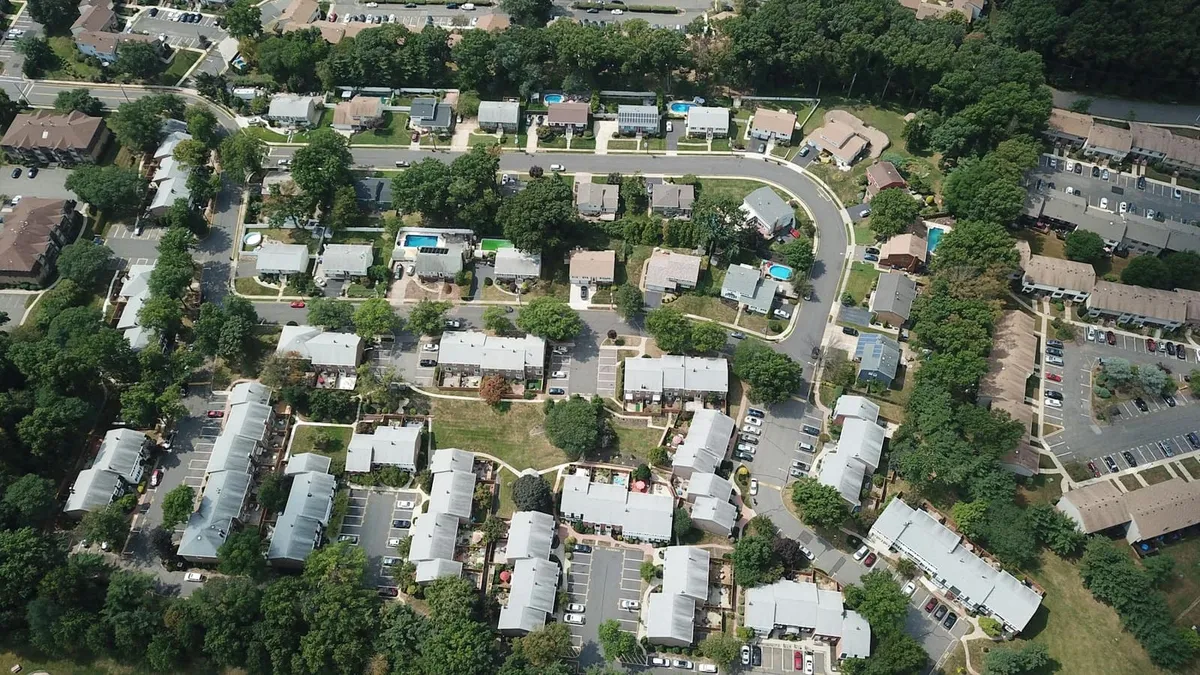
The house sits at the end of a quiet block in Montclair, its wide front porch shaded by a copper beech that has been there longer than anyone on the street. Inside, six women share a dining room table, a living room with a working fireplace, and a kitchen that smells like coffee and oatmeal at seven in the morning. A caregiver named Rosa has worked here for nine years. She knows which resident takes her pills with applesauce, which one walks the garden loop twice after lunch, and which one needs the hallway light left on at night.
This is a Comprehensive Personal Care Home, one of New Jersey’s two categories of licensed residential care. It is small, home-like, and barely visible from the outside. Most families searching for care in New Jersey have never heard of it. They search for “assisted living in New Jersey” and find large apartment-style communities with activity calendars and marketing budgets. The smaller settings exist, but finding them takes knowing where to look and understanding how New Jersey categorizes care.
This guide covers both of New Jersey’s residential care models, how the licensing works, what care costs across different parts of the state, how to pay, and how to find and evaluate a good home. If you are new to the concept of small residential care, start with our main guide to board and care homes. For the broader cost picture, see our cost guide.
How New Jersey defines and licenses residential care
New Jersey’s residential care system has two distinct licensing categories, each governed by its own set of regulations. Understanding the difference is the first step in an effective search.
Assisted Living Residences (ALRs) are licensed under N.J.A.C. 8:36. ALRs provide apartment-style living units, each with a private bathroom and kitchenette, combined with personal care services. They can range in size from small buildings with a handful of units to large communities with over 100 apartments. The defining feature is the apartment model: residents have their own lockable unit with cooking and bathing facilities, and they receive care services delivered to them rather than in a shared setting. ALRs can serve residents across a range of care needs, from minimal assistance to significant daily support.
Comprehensive Personal Care Homes (CPCHs) are licensed under N.J.A.C. 8:37. CPCHs are smaller, more communal settings where residents typically share dining areas, living rooms, and sometimes bathrooms. They operate in residential-style buildings, often converted houses, and provide personal care, meals, housekeeping, and supervision. CPCHs are closer in spirit and structure to what families in other states call board and care homes, adult family homes, or personal care homes. For families looking for the intimate, home-like model, CPCHs are the category to explore.
A third category worth knowing about: Class C Boarding Homes are licensed by the New Jersey Department of Community Affairs and provide room, board, and minimal personal assistance but not the level of personal care that ALRs and CPCHs provide. They serve a different population and are not the focus of this guide, but the name comes up in searches and it helps to know the distinction.
Licensing and regulation details
Both ALRs and CPCHs are licensed and inspected by the New Jersey Department of Health (NJDOH), specifically through the Health Care Facility Licensing and Inspection Program. The state conducts routine inspections, investigates complaints, and enforces compliance with applicable regulations.
What the license requires
For Assisted Living Residences under N.J.A.C. 8:36, the regulations cover:
- Physical environment: each resident must have a private apartment-style unit with a lockable entrance, a private bathroom, a kitchenette or kitchen area, temperature controls, and adequate space. Common areas for dining and activities are also required.
- Service plans: every resident must have a written, individualized service plan developed within 30 days of admission and updated at least annually or whenever a significant change in condition occurs.
- Staffing: a licensed administrator must oversee the facility. Direct care staff must be available 24 hours a day. Staff-to-resident ratios are determined by the service plan needs of the resident population.
- Health services coordination: the ALR must arrange for or coordinate health care services, including medication management, and must maintain a working relationship with a licensed nurse.
For Comprehensive Personal Care Homes under N.J.A.C. 8:37, the requirements are similar in their protective intent but reflect the smaller, more communal model:
- Physical environment: the home must provide a safe, clean, home-like environment. Residents may share common areas but must have adequate private space for sleeping and personal belongings.
- Personal care services: CPCHs provide help with activities of daily living (bathing, dressing, grooming, toileting, eating, mobility) and instrumental activities like medication reminders and transportation coordination.
- Administrator and staffing: the home must have a designated administrator and sufficient direct care staff to meet resident needs around the clock.
- Meals: three meals a day plus snacks, with accommodations for dietary restrictions and physician-ordered diets.
Inspections and enforcement
NJDOH inspects licensed facilities on a regular cycle and also conducts complaint-driven inspections when concerns are reported. Inspectors review resident records, observe care delivery, check medication management, interview staff and residents, and assess the physical environment. Deficiencies are documented and the facility must submit a plan of correction. Serious or repeated violations can result in fines, conditional licenses, or revocation.
New Jersey also has a Long-Term Care Ombudsman program, administered through the state’s Office of the Long-Term Care Ombudsman, that advocates for residents in all licensed long-term care settings, including ALRs and CPCHs. The ombudsman investigates complaints, mediates disputes, and provides information to families. The service is free and confidential.
Staff training requirements
New Jersey requires assisted living administrators to hold a state-issued license, which involves completing an approved training program and passing an examination. Direct care staff must complete orientation training before working with residents and ongoing in-service training throughout their employment. Facilities serving residents with dementia must provide additional specialized training to all staff who interact with those residents.
The practical gap between the state minimum and what the best homes actually do is significant. When you tour, ask about staff tenure, turnover rates, and what additional training the home provides beyond the state requirements. Homes where caregivers have been in place for years tend to deliver more consistent, relationship-based care than homes with frequent turnover. Our guide to questions to ask when visiting covers the specific areas to probe.
What care costs across New Jersey
New Jersey consistently ranks among the most expensive states in the country for long-term care of any kind, and assisted living is no exception. Costs vary by region, the type of facility, the level of care needed, and the specific amenities offered.
Northern New Jersey
The counties closest to New York City (Bergen, Essex, Hudson, Morris, Passaic, Union) are the most expensive. A private unit in an ALR in this region typically runs $6,000 to $10,000 per month for basic personal care services. Premium communities with extensive amenities, newer construction, or prime locations can exceed $10,000. CPCHs in northern New Jersey, where they exist, tend to run $5,500 to $8,500 per month.
The northern New Jersey market is heavily influenced by the New York metro economy. Real estate costs, labor costs, and the general cost of living all drive care prices higher here than almost anywhere else on the East Coast outside of Manhattan itself.
Central New Jersey
Middlesex, Mercer, Monmouth, Somerset, and Ocean counties represent the middle tier. ALR costs typically range from $5,000 to $8,000 per month for basic care. CPCHs run $4,500 to $7,500. This region offers somewhat more options in the moderate price range, particularly in areas farther from the commuter corridors.
Southern New Jersey
Camden, Burlington, Gloucester, Atlantic, Cumberland, and Cape May counties are generally the most affordable part of the state for residential care. ALR costs run $4,000 to $6,500 per month, and CPCHs tend to fall in the $3,500 to $6,000 range. The Shore communities (Cape May, parts of Atlantic County) can run higher during peak seasons or for facilities in premium locations.
What drives cost variation
Several factors explain the wide ranges within each region:
- Room type: a private room or apartment costs more than a shared one. In ALRs, all units are private by regulation, but size and finishes vary. In CPCHs, shared rooms are more common and less expensive.
- Care level: a resident who needs minimal assistance pays the base rate. As care needs increase (help with multiple activities of daily living, incontinence care, two-person transfers, memory care), monthly charges rise. Many facilities use a tiered pricing model that adds $500 to $3,000 per month for higher care levels.
- Memory care: residents with Alzheimer’s disease or other forms of dementia often require specialized programming, secured environments, and higher staffing ratios. Memory care typically adds $1,000 to $3,000 per month above the base rate.
- Location and amenities: newer buildings with modern finishes, fitness facilities, salon services, and organized programming charge more than older, simpler settings.
For a broader look at how costs compare nationally, see our cost guide.
How to pay for care in New Jersey
Given the high cost of care in New Jersey, most families piece together several funding sources. Here are the primary options.
Private pay
The majority of assisted living residents in New Jersey pay privately, using a combination of Social Security income, pension benefits, savings, investment income, proceeds from a home sale, and family contributions. For many families, the parent’s Social Security check covers a portion of the monthly cost, and savings or family help covers the rest. Our guide to seven ways to pay for care covers the full range of private funding strategies.
NJ FamilyCare (Medicaid) and MLTSS
New Jersey’s Medicaid program, NJ FamilyCare, covers assisted living services through its Managed Long-Term Services and Supports (MLTSS) program. MLTSS is New Jersey’s system for delivering long-term care services to Medicaid-eligible individuals through managed care organizations (MCOs). Under MLTSS, eligible beneficiaries who meet a nursing-facility level of care can receive services in community-based settings, including licensed ALRs and CPCHs, rather than in a nursing home.
Key points about MLTSS coverage for assisted living:
- Eligibility: the individual must be enrolled in NJ FamilyCare (Medicaid) and must meet the clinical criteria for nursing-facility level of care as determined by a functional assessment.
- Financial eligibility: New Jersey uses the standard Medicaid financial criteria, including income and asset limits. The state has a Medicaid spend-down provision and allows certain asset protections for a community spouse (the spouse who is not entering care).
- What is covered: MLTSS covers the care services portion, including personal care, health monitoring, and care coordination. The resident typically contributes their income (Social Security, pension) toward room and board.
- Not every facility participates: only facilities that have contracts with the MLTSS managed care organizations accept Medicaid-funded residents. Ask each facility directly whether they accept NJ FamilyCare/MLTSS.
- MCO assignment: each Medicaid beneficiary is assigned to a managed care organization (such as Amerigroup, Horizon NJ Health, or UnitedHealthcare Community Plan) that coordinates their care and pays the facility.
For a deeper look at how Medicaid covers residential care nationally, see our Medicaid guide.
VA Aid and Attendance
Wartime veterans and surviving spouses may qualify for the VA’s Aid and Attendance benefit, which provides a monthly payment to help cover the cost of care. The maximum monthly benefit in 2026 exceeds $2,700 for a single veteran and over $1,700 for a surviving spouse. The benefit is tax-free and can be used toward ALR or CPCH costs. New Jersey has a large veteran population and Aid and Attendance remains one of the most underused benefits available.
Long-term care insurance
If your parent purchased a long-term care insurance policy, it likely covers assisted living. Most policies issued in the last two decades cover care in licensed residential settings, up to a daily or monthly benefit cap and subject to an elimination period (a waiting period, typically 30 to 90 days, before benefits begin). Contact the insurer’s claims department early in the search process, not after admission. Policies vary in what triggers benefits, how they define covered settings, and what documentation is required.
Life insurance and annuity conversions
Some families convert a life insurance policy into a long-term care benefit through a life settlement or an accelerated death benefit rider. Others use annuities to create a stream of income that covers monthly care costs. These strategies are complex and benefit from professional guidance. A financial advisor or elder law attorney can evaluate whether a conversion makes sense for your family’s situation.
New Jersey’s Pharmaceutical Assistance Program
While not a direct funding source for assisted living, New Jersey’s Pharmaceutical Assistance to the Aged and Disabled (PAAD) program and Senior Gold Prescription Discount Program can reduce medication costs for qualifying seniors, freeing up funds for care. Eligibility is based on income and residency.
How to find and evaluate homes in New Jersey
The search process in New Jersey follows a similar pattern to other states, but with some New Jersey-specific resources and considerations.
Step 1: Clarify what you need
Before you start searching, define the basics. What level of care does your parent need today? What are the likely needs in 12 to 24 months? Does your parent have dementia or a cognitive condition that requires specialized care? What is the realistic monthly budget? Which part of the state makes sense given family proximity, medical providers, and the parent’s preferences?
Our step-by-step guide to finding a care home walks through this process in detail.
Step 2: Search the NJDOH database
The New Jersey Department of Health maintains a searchable directory of all licensed long-term care facilities, including ALRs and CPCHs. You can search by facility type, county, and name. Each listing shows the facility’s license status, address, licensed capacity, and contact information.
Additionally, the NJDOH publishes inspection survey results that detail deficiencies cited during inspections and the facility’s plans of correction. Review these reports before scheduling tours. A facility with a clean inspection record over several years signals consistent quality. One with repeated deficiencies in the same area (medication errors, staffing shortfalls, environmental safety) signals a pattern that is unlikely to change quickly.
Step 3: Build a shortlist and phone-screen
Once you have a list of licensed facilities in your target area, call each one. Ask about current availability, the base monthly rate, what the rate includes, how additional care charges are determined, whether they accept NJ FamilyCare/MLTSS, and whether they have experience with the level of care your parent needs.
A ten-minute phone call can eliminate half the list and save you hours of unnecessary touring. The homes worth visiting are the ones that answer your questions clearly, do not pressure you, and sound like they know their residents.
Step 4: Tour in person
Visit at least three homes, and ideally five. Walk through the entire facility. Observe the common areas, the dining room, and at least one resident room or apartment. Watch how staff interact with residents. Ask to meet the administrator and at least one caregiver who works a regular shift. Our red flags guide covers what to watch for during a tour.
Pay attention to the intangibles. Does the home smell clean? Are residents engaged or sitting passively? Do staff greet residents by name? Is the environment warm and homey, or does it feel institutional? The small details often tell you more than the marketing materials.
Step 5: Check references and make an unannounced visit
Ask the facility for references from current resident families and, if possible, from the resident’s physician or a discharge planner at a local hospital who has placed patients there. After your scheduled tour, visit once more without an appointment, ideally during a meal or an evening shift. The home that looks and feels the same on the unannounced visit is the one to trust.
Step 6: Read the contract
New Jersey law requires ALRs to provide a written contract that clearly states the services included in the base rate, the charges for additional services, the terms for rate increases, the discharge and transfer policies, and the refund policy for prepaid fees. Read the contract carefully. Ask about the circumstances under which the facility can require a resident to move, how much notice is required, and what happens to deposits if the resident leaves.
If anything in the contract is unclear or seems unusual, consult an elder law attorney before signing. New Jersey has a strong elder law bar, and many attorneys offer free or low-cost initial consultations for families navigating long-term care decisions.
The New Jersey Long-Term Care Ombudsman
The Office of the Long-Term Care Ombudsman is a state-funded program that advocates for residents in licensed long-term care settings, including ALRs and CPCHs. Ombudsman staff investigate complaints, mediate disputes between residents and facilities, provide information to families, and monitor conditions in licensed facilities. The service is free and confidential.
If you have concerns about the care your parent is receiving, the ombudsman is the appropriate first contact. They can intervene informally, investigate formally, or refer you to the appropriate regulatory agency if needed. Contact information is available through the New Jersey Division of Aging Services or the Eldercare Locator.
Comparing New Jersey to neighboring states
Families in northern New Jersey often consider facilities across the border in New York, and families in southern New Jersey sometimes look at options in Pennsylvania. A few differences are worth noting.
New York licenses Adult Care Facilities, a category that includes assisted living residences and adult homes. New York’s system is regulated by the Department of Health and has its own set of rules, inspection processes, and Medicaid programs. If you are considering both states, see our New York guide for the specifics.
Pennsylvania licenses Personal Care Homes, which are closer in concept to New Jersey’s CPCHs. Pennsylvania’s system tends to have a wider range of small-home options in less urban areas, and Medicaid coverage for personal care homes is available through the state’s waiver programs. See our main guide for the terminology overview across states.
The practical advice for families near a state border: verify that the facility is licensed in the state where it operates, understand which state’s Medicaid program applies (Medicaid eligibility is based on the state of residence), and be aware that transferring from a facility in one state to one in another may require re-establishing care relationships, changing physicians, and re-applying for benefits in the new state.
The next step
If you are searching for assisted living or small residential care in New Jersey, the most useful action this week is to visit the NJDOH facility database and identify licensed ALRs and CPCHs in your target counties. From there, phone-screen five to eight homes, narrow to three to five for in-person tours, and plan to complete the touring process over two to three weeks.
For families exploring Medicaid coverage, contact your parent’s NJ FamilyCare managed care organization to ask about MLTSS eligibility and which facilities in your area accept Medicaid. Starting that conversation early gives you more options.
The process of finding the right home takes time and patience, but the result (a place where your parent is known, cared for, and safe) is worth the effort.
Sources and further reading: New Jersey Department of Health, Health Care Facility Licensing and Inspection Program; N.J.A.C. 8:36 (Assisted Living Residences); N.J.A.C. 8:37 (Comprehensive Personal Care Homes); NJ FamilyCare / MLTSS; New Jersey Office of the Long-Term Care Ombudsman; New Jersey Division of Aging Services; Eldercare Locator.