There is no shortage of marketing copy about small residential care homes. There is much less honest analysis of the tradeoffs. Small homes are not better than large assisted living communities in every situation, and they are not worse. They are different, and the difference matters in specific ways for specific people.
This guide is the honest assessment we wish more families had when they started searching. We are going to lay out the genuine strengths of small homes, the genuine limits, and the questions that separate a good fit from a wrong fit. By the end, you should be able to tell whether a small home is the right setting for the person you are caring for, or whether your search should be pointed somewhere else.
What small care homes do exceptionally well
High staff-to-resident ratios
The clearest structural advantage of a small home is the number of caregivers per resident. A typical six-bed home with two caregivers on day shift gives each resident roughly one caregiver per three residents during the busiest hours of the day. A typical large assisted living community with eighty residents and ten caregivers on day shift gives each resident roughly one caregiver per eight, sometimes worse. For a resident who needs help with dressing, walking, eating, or using the bathroom multiple times a day, this difference is enormous. It is the difference between waiting fifteen minutes for help and waiting two minutes.
This is also the structural reason that small homes can provide care for residents who would be considered “too high care” for some larger communities. The math works in their favor.
Personal relationships
In a small home, every caregiver knows every resident by name, by history, by preference, and by mood. They know that one resident takes her coffee black and reads the obituaries before the news, that another resident will not eat anything green, that a third resident gets confused around four o’clock and needs to be redirected gently. This kind of knowing is not optional polish. It is the core of what a small home offers, and it is something a large community usually cannot match because the staff rotates more, the resident roster is bigger, and the structural relationship between staff and residents is shaped by scale.
For residents with dementia, this matters more than almost anything else. A consistent caregiver who knows the resident’s history is one of the strongest non-pharmacological interventions in dementia care, according to research published by the Alzheimer’s Association and the National Institute on Aging.
A real household environment
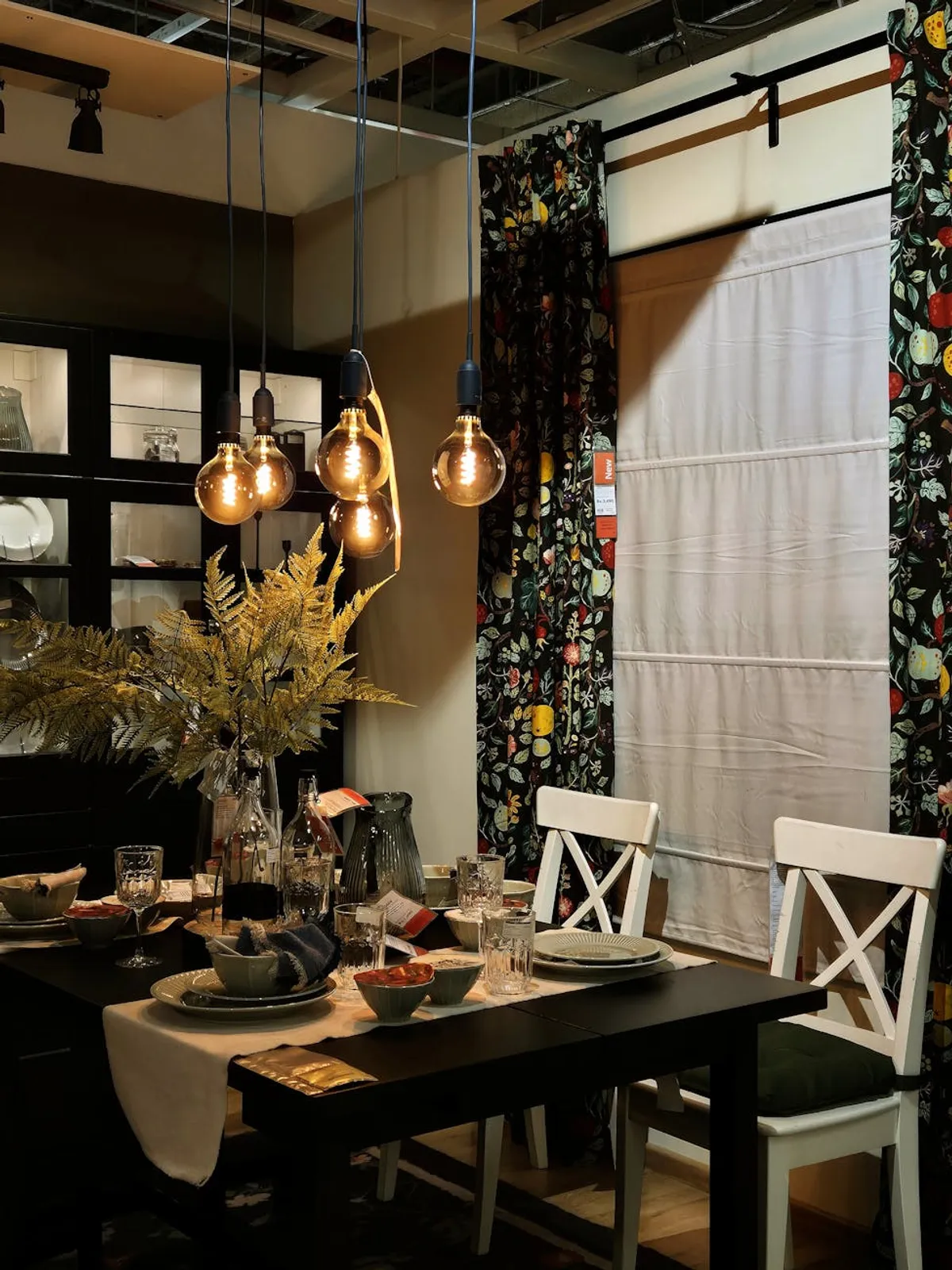
A small home is a house. There is a kitchen with food cooking in it, a living room with real furniture, bedrooms with the residents’ own belongings, bathrooms that look like bathrooms, a garden or a back yard, and a front door that opens onto a residential street. For older adults who spent their entire lives in houses, this is enormously comforting in ways that cannot be quantified but that show up in mood, in appetite, in sleep quality, and in the willingness to eat at the table instead of in a room alone. Read our walk-through of a typical day in a small care home for a sense of what this looks like in practice.
Cultural and linguistic specialization
Many small homes are operated by families who serve residents from a particular cultural background, speak a particular language, cook particular foods, and observe particular religious or seasonal traditions. For older adults whose first language is not English, or whose dietary and cultural needs are deeply tied to identity, a small home that matches those needs can be the difference between a setting where they are visiting and a setting where they belong. This kind of specialization is much rarer in large communities, which generally aim for the broad middle.
Easier coordination with outside care
Because small homes are non-medical, they routinely coordinate with outside professionals: home health agencies, hospice providers, physical therapists, podiatrists, dentists who do home visits. In a small home, these visits are arranged with the provider directly and happen in the resident’s own bedroom. The coordination is usually faster and more personal than in a large community where outside visits must go through multiple administrative layers.
What small care homes do less well
Limited amenities
A small home has no salon, no fitness room, no chapel, no movie theater, no library, no transportation van with a printed schedule. For some residents this is a real loss. Someone who would enjoy a daily yoga class at 9 a.m. or a weekly art workshop with twelve other residents is going to be happier in a community that offers those things. The household environment is intimate, but intimate also means small.
No printed activity calendar
Most small homes do not have an activity director. Activities tend to be informal: shared meals, conversation, watching a baseball game, doing a crossword, sitting in the garden. For residents who thrive on structure and group programming, this can feel like there is “nothing to do.” For residents who would feel exhausted by a constantly busy social calendar, the quiet rhythm of a household is the right pace. Match the home to the person.
Variable overnight staffing
This is one of the most important and least discussed tradeoffs. Some small homes have a caregiver awake all night. Some have a caregiver sleeping on the premises with a baby monitor and a phone. Some, in some states and license categories, allow a sleeping arrangement that is closer to a household than a clinical setting. None of these arrangements are inherently bad. But they are different, and the difference matters for residents who get up at night, who have a fall risk, who have dementia and may wander, or who need timed medications during the night. Always ask each home you tour exactly how the night shift is staffed, and verify the answer against the home’s most recent inspection report.
Less redundancy when staff are out
A small home may have one or two caregivers on duty at a time, and the provider is often one of those caregivers personally. When the provider is sick, on vacation, or dealing with a family emergency, the staffing depth is shallower than at a large community. Good small home operators have backup plans (a relief caregiver, a relative who can step in, a sister home that shares staff), but the depth is not the same. Ask every home you tour what happens when their primary caregiver calls in sick.
Complex care transitions
A small home may not be able to absorb every change in a resident’s care needs. If a resident has a stroke, develops late-stage dementia with significant behavioral symptoms, or begins requiring two-person transfers and full incontinence care, some small homes can adapt and some cannot. The provider’s honest answer to “what triggers a discharge” should be the most important data point in your decision. We discuss this in detail in our guide to questions to ask when visiting a care home.
Less anonymity
In a small home, everyone knows everyone. For most residents this is the entire point. For some residents, particularly those who valued their privacy fiercely throughout their lives, the closeness of a household can feel intrusive. A larger community offers more anonymity. This is not a fatal objection, and most residents adapt, but it is worth thinking about for someone who has always preferred to be left alone.
Who small care homes are best for
After several thousand families and several years of watching how this decision actually plays out, we see consistent patterns. Small homes tend to be the right setting for:
- Older adults who would feel lost or anxious in a large community.
- Residents with dementia who benefit from consistent caregivers and a predictable routine.
- Residents who need higher staff attention than a typical large community can provide affordably.
- Families who place a high value on a home-like environment and shared meals.
- Residents whose cultural, linguistic, or dietary needs are best served by a specialty home.
- Residents whose care needs are stable, or whose changes are likely to be slow rather than sudden.
Small homes tend to be the wrong setting for:
- Residents who actively want and use the amenities of a large community: gym, salon, classes, group activities, large dining room.
- Residents whose medical needs require around-the-clock skilled nursing or complex clinical oversight.
- Families who cannot find a small home in their geographic area that has been in business long enough to have a track record.
- Residents whose care is changing rapidly and unpredictably, where a setting with more clinical depth is safer.
If you recognize your situation in the second list, our comparison of board and care vs. nursing home will help you think about whether a higher-acuity setting is the right next step.
The honest cost picture
The popular framing that small homes are “cheaper than assisted living” is true in some markets and false in others. In coastal California, a private room in a small home with above-average staffing can cost as much as or more than a basic studio in a large assisted living community. In other markets, a shared room in a small home is meaningfully less expensive than any private option in a large community. The right answer depends on the local market, the level of care, and the room type.
What is consistently true is that small homes tend to be a better value at higher care levels. A resident who needs significant help with activities of daily living often pays steep “level of care” surcharges in a large community, on top of the base rent, while a small home tends to bundle the care into the monthly rate. For residents whose needs would push them into the highest tiers, the price difference can be substantial. Our full cost guide walks through these dynamics with current numbers from the major data sources, including the Genworth Cost of Care Survey.
How to use this honest assessment
The takeaway is not that small homes are good or bad. It is that the right setting depends on the person, the family, the budget, the local market, and the specific needs in front of you right now. Once you can name the things you most care about, the search becomes much more focused.
Browse the state directory for your state, or use the California RCFE listings if you are in California. As you build a shortlist, bring this list of pros and cons with you and use it to ask better questions on tours. The homes that handle the hard questions honestly are the ones most likely to be honest with you later, when something goes wrong.
Sources and further reading: Genworth Cost of Care Survey; Alzheimer’s Association — Dementia Care Practice Recommendations; National Institute on Aging — Caregiving Tips for Communication; California Department of Social Services, Community Care Licensing Division; AHRQ — Long-Term Care.